Door Buddy Review (2026): Keep Your Dog Out of the Litter Box
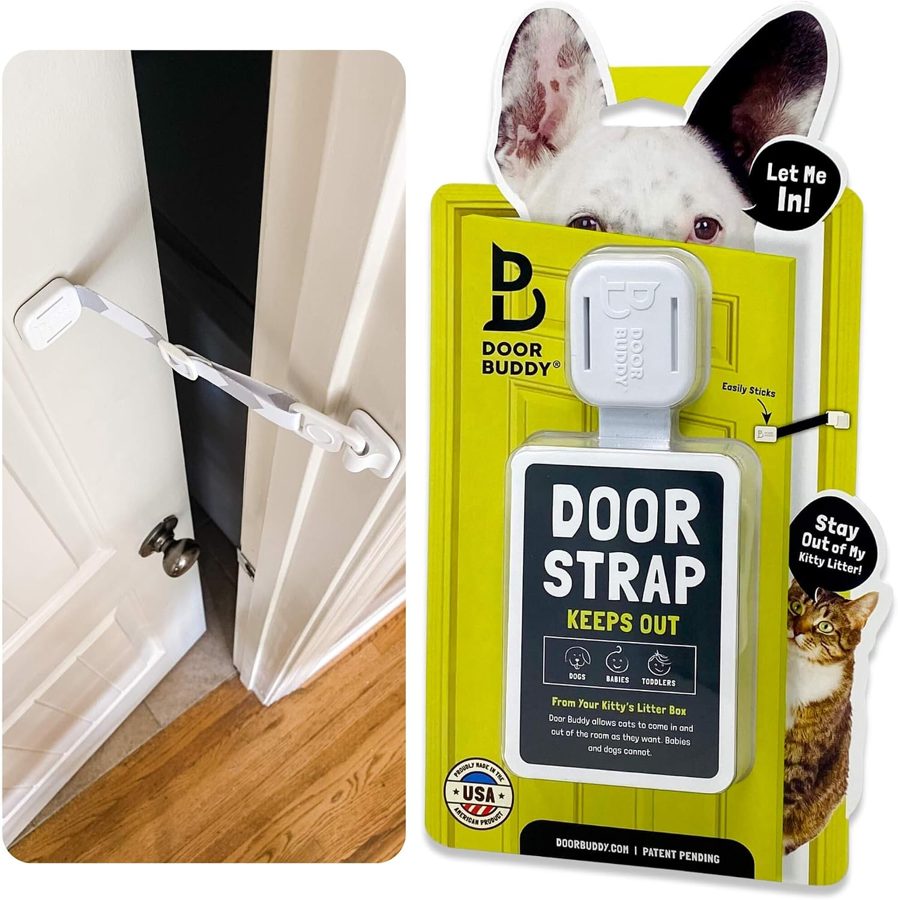
A simple adjustable strap that holds an interior door ajar just enough for your cat — but not your dog — to get through. The original no-cut alternative to an internal cat door.
Typical price: $25–$30 · No tools required
As an Amazon Associate, we earn from qualifying purchases.
Door Buddy in pictures
What is Door Buddy?
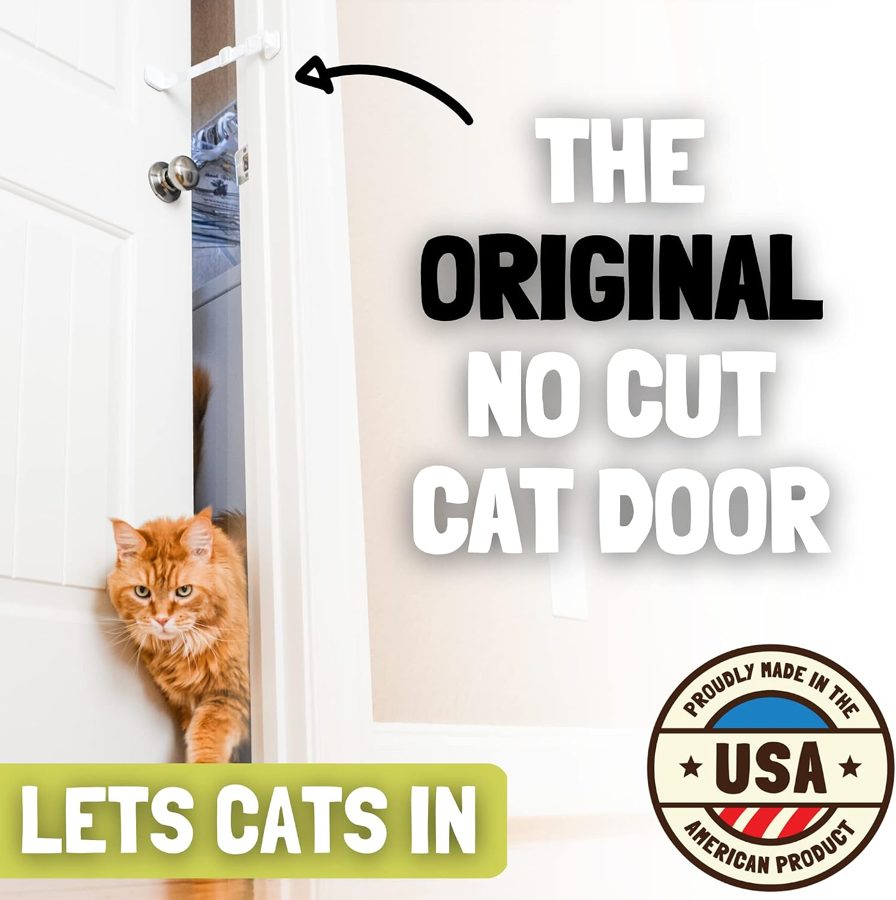
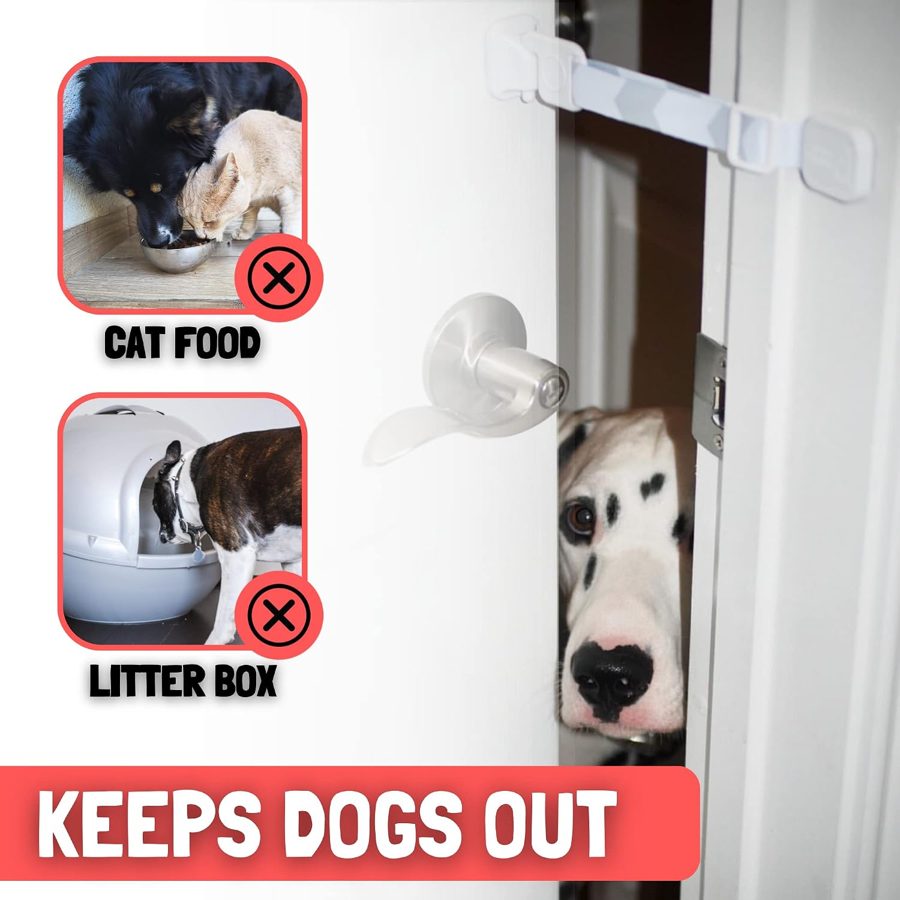
Door Buddy is an adjustable fabric strap that links an interior door to its frame, holding it open by a few inches. Cats slip through the narrow gap; dogs can't. When you want the door open properly, you simply unhook the latch.
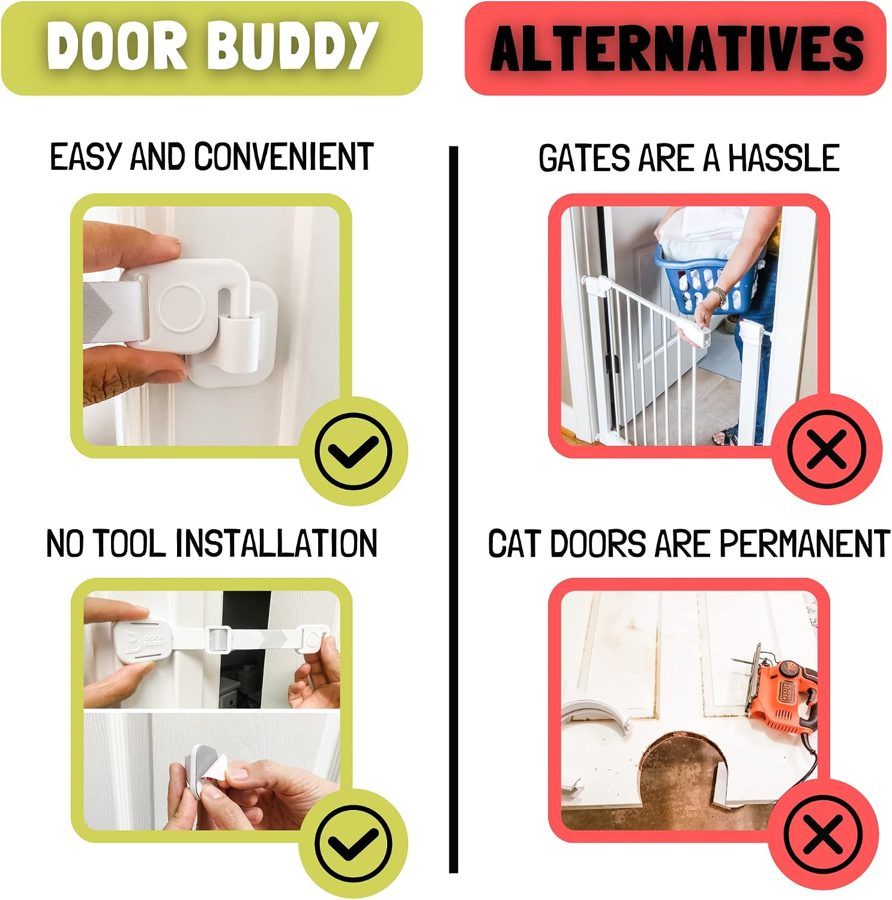
It's a popular fix for two very common problems: a dog raiding the litter box, and a dog eating the cat's food. Rather than a bulky pet gate with a cat door, or cutting an interior cat flap into a door you may not be allowed to modify, one strap solves it in minutes. Door Buddy is made in the USA and is the original product in this style — the copies that followed tend to use weaker adhesive and flimsier adjusters.
How it works
1. Stick the pads on
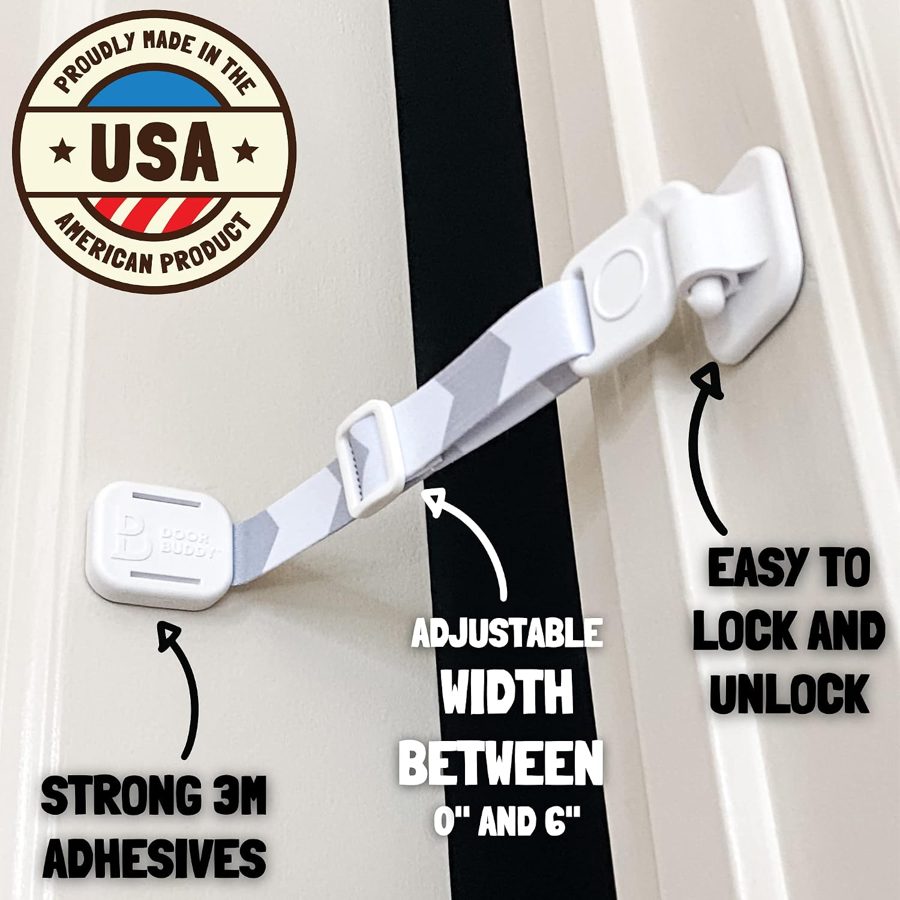
Peel and stick the 3M adhesive pads to the door and the door frame. No tools, no screws, no holes.
2. Set the gap
Use the adjuster to set how wide the door sits open — just enough for your cat's width.
3. Cat gets access
Your cat pushes through the gap to reach the litter box or food whenever they like.
4. Dog stays out
The gap is too narrow for the dog, and the strap stops the door being pushed open.
Need to get in? Unhook the latch and the door opens normally from either side. For very determined dogs, Door Buddy recommends fitting the strap on the back of the door for a stronger hold.
Pros
- No cutting, drilling or permanent changes — landlord-friendly
- Installs in minutes with peel-and-stick 3M pads
- Adjustable gap suits cats of different sizes
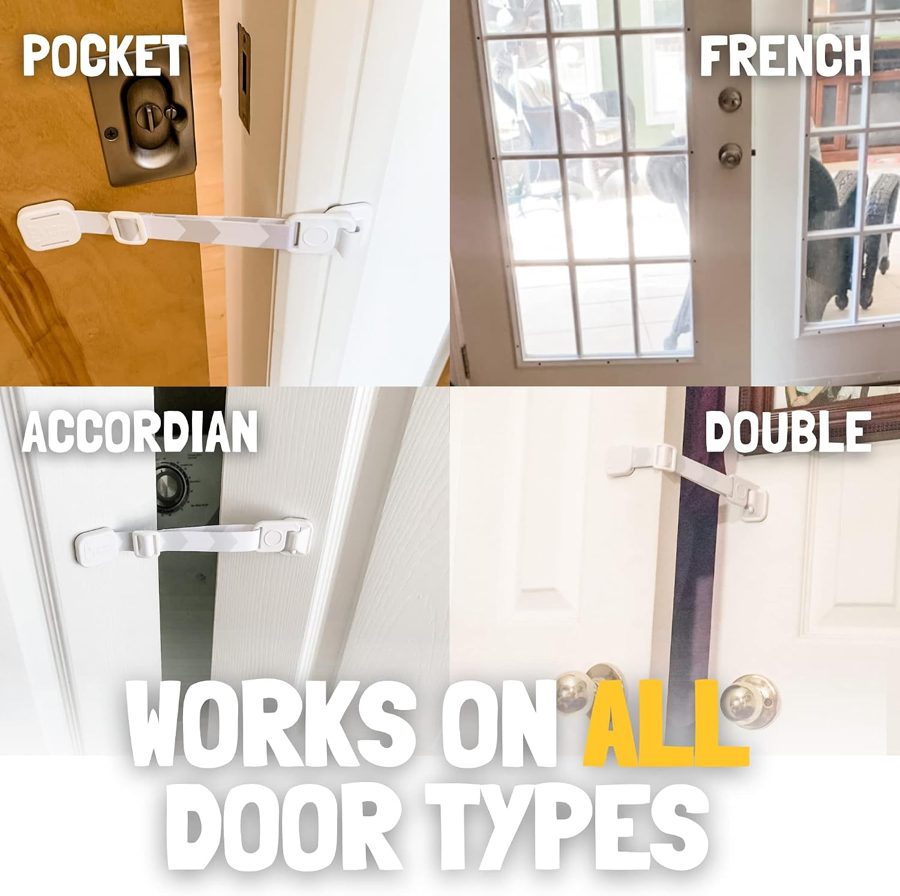
- Works on bifold, sliding, pocket and double doors
Cons
- Adhesive can fail on drywall or textured surfaces
- Very large or persistent dogs may defeat it
- The door sits permanently ajar — less draft-proof than a closed door
- Not suitable as the main exit to the outdoors — that's a cat flap's job
Specifications
| What it is | Adjustable door strap and latch — no cutting, no cat door |
|---|---|
| Door gap it leaves | Adjustable from closed to about 6 inches |
| Installation | Peel-and-stick 3M adhesive pads — no tools, no screws |
| Door types | Standard, bifold, sliding, pocket and double doors |
| Designed to hold | Dogs up to around 110 lb (most household breeds) |
| Best mounted on | The door itself and the frame — never on drywall |
| Typical US price | $25–$30 |
Door Buddy or an interior cat flap?
Choose Door Buddy if you're renting, you don't want to modify the door, or the problem is purely a dog getting into a specific room. Choose an internal cat flap if you want the door to close properly and look tidy long-term — a handyman can fit one into a hollow-core interior door in under an hour.
One thing Door Buddy can't do is let your cat in and out of the house. For that you'll want an exterior microchip cat flap — see our cat flap reviews or try the cat flap quiz to find the right model.
Our advice from experience
As professional cat-door installers we see the dog-in-the-litter-box problem constantly, and Door Buddy is the first thing we recommend when someone just needs a room kept dog-free. Clean the door and frame with alcohol before sticking the pads down, let them cure for a few hours before loading the strap, and set the gap to the smallest your cat will comfortably use — the narrower the gap, the harder it is for the dog.
If the dog is bigger than roughly 110 lb or is genuinely determined (some Labradors will test any latch), a proper internal cat door or a dedicated microchip pet door is the more robust answer.
Frequently Asked Questions
Related guides
As an Amazon Associate, we earn from qualifying purchases. Prices are indicative and change over time.