Cat Flap in French Doors
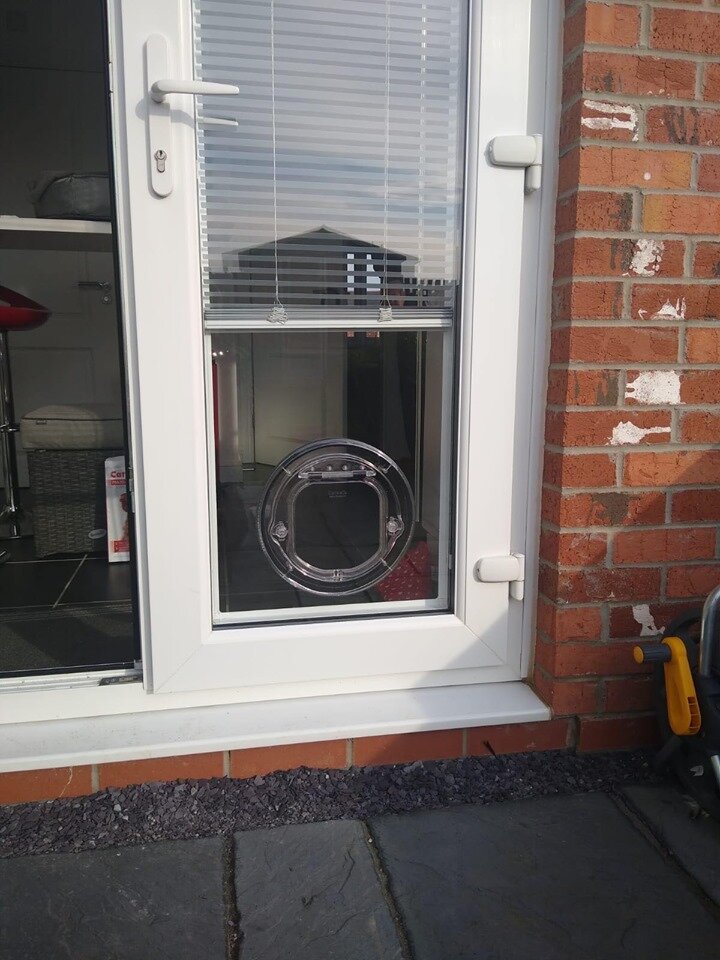
Fitting a cat flap in French doors means a brand-new toughened glass panel with the aperture pre-cut — dropped into your existing frame so the doors still open, lock and seal exactly as they did before.
How We Fit a Cat Flap in French Doors
1. Measure-up. We measure the glazed pane, note the glass specification and confirm which leaf the flap should go in — usually the passive leaf you keep bolted.
2. New toughened unit. A replacement double-glazed unit is manufactured with the cat flap aperture cut before toughening and the spacer bar routed around it, so the seal stays intact.
3. Fitting. We remove the beading, swap the unit, fit the cat flap with a round mounting adaptor and reseal both sides. Locks, hinges and the shoot-bolt mechanism are checked before we leave.
- uPVC, aluminium and timber French doors
- Fitted into the passive leaf so your main door is untouched
- Frame and multi-point lock never cut
- Glass spec, obscure patterns & Georgian bars matched
- Microchip flaps fitted — SureFlap, PetSafe, Pet-Tek, Closer Pets
- 3-year workmanship guarantee
Which Leaf Should the Cat Flap Go In?
Passive leaf (recommended)
The door you keep bolted top and bottom. The flap sits in a pane that never moves, so there's no swing, no strain on the hinges and no risk of the flap catching as the door opens.
Active leaf
Possible where the passive leaf is blocked by furniture or a step. The flap simply travels with the door — worth knowing that a cat mid-flap when the door opens is the main downside.
French Door Cat Flap FAQs
Our Installation Services
Glass & French Door Guides
Can You Put a Dog Flap in a Glass Door? (UK Guide 2026)
The short answer is yes — and it's more common than you think. Here's how a dog flap is fitted into a glass patio or French door in the UK, which brands work best, and what to budget.
Buying GuideBest Cat Flap for Glass Doors: A Complete Guide
The best cat flap for a glass door is the Pet-Tek Superior — designed specifically for glass with a round frame that reduces stress on the pane. For microchip security in glass, SureFlap and PetSafe fit into a pre-cut toughened panel using a round mounting adaptor. Toughened glass cannot be cut, so every install uses a brand-new factory pre-cut unit.
How-To GuidesHow to Install a Pet Door in a Glass Door (UK Step-by-Step Guide)
Installing a pet door in a glass door is not a DIY job — toughened glass can't be cut on-site. Here's exactly how professional UK installers do it, what you'll pay, and how long it takes.
PricingCat Flap Installation Cost for Glass Doors: What to Expect in 2026
Glass door cat flap installations cost more than UPvc or composite because a new toughened glass panel is required. Here's exactly what to expect price-wise in 2026.
Get a Free French Door Cat Flap Quote
Send a photo of your French doors and we'll confirm the method and price within 24 hours.