Cat Flaps and UK Home Insurance: What Insurers Actually Say
Do You Need to Tell Your Insurer?
For a standard cat flap fitted into a door or sealed glass unit on a freehold UK home, the majority of mainstream insurers do not require you to notify them. A cat flap is not classed as a 'material alteration' to the structure of the building in the way an extension or loft conversion is.
That said, policy wording varies. If your policy contains a clause requiring notification of *any* alteration to external doors or glazing, declare it. A 30-second call costs nothing and removes any future doubt.
What Most UK Insurers Care About
Across mainstream UK home policies, the consistent themes are:
- Professional installation. Work carried out by a qualified installer with documented evidence — invoice, photos, workmanship guarantee.
- Building Regulations compliance. The new glass (where applicable) must meet Approved Document K (safety glazing) and Approved Document L (thermal performance). We meet both by default — see our FENSA / Building Regs guide.
- Maintaining door integrity. The door's locking points and structural reinforcement must not be compromised. We avoid the reinforced zone on every uPVC and composite install.
- Pet behaviour. Some pet insurance policies (separate from home insurance) require the cat flap to be lockable if certain breeds or conditions are listed.
Evidence to Keep on File
After any cat flap install, keep:
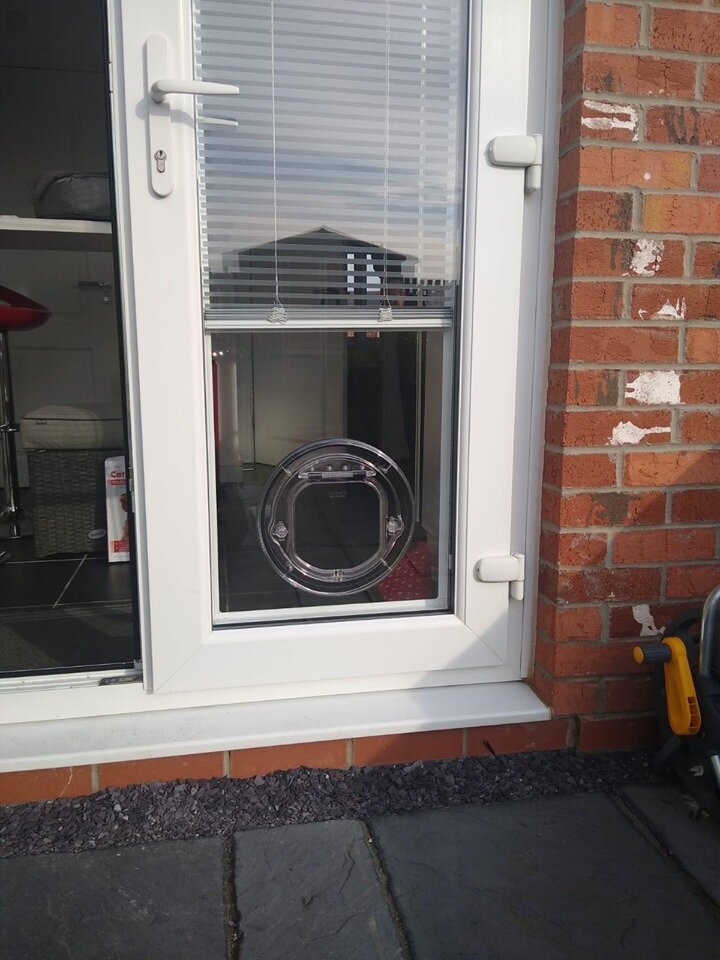
• The installer's invoice with the date, address, flap model and door type listed
• A workmanship guarantee (ours is 3 years — see our guarantee page)
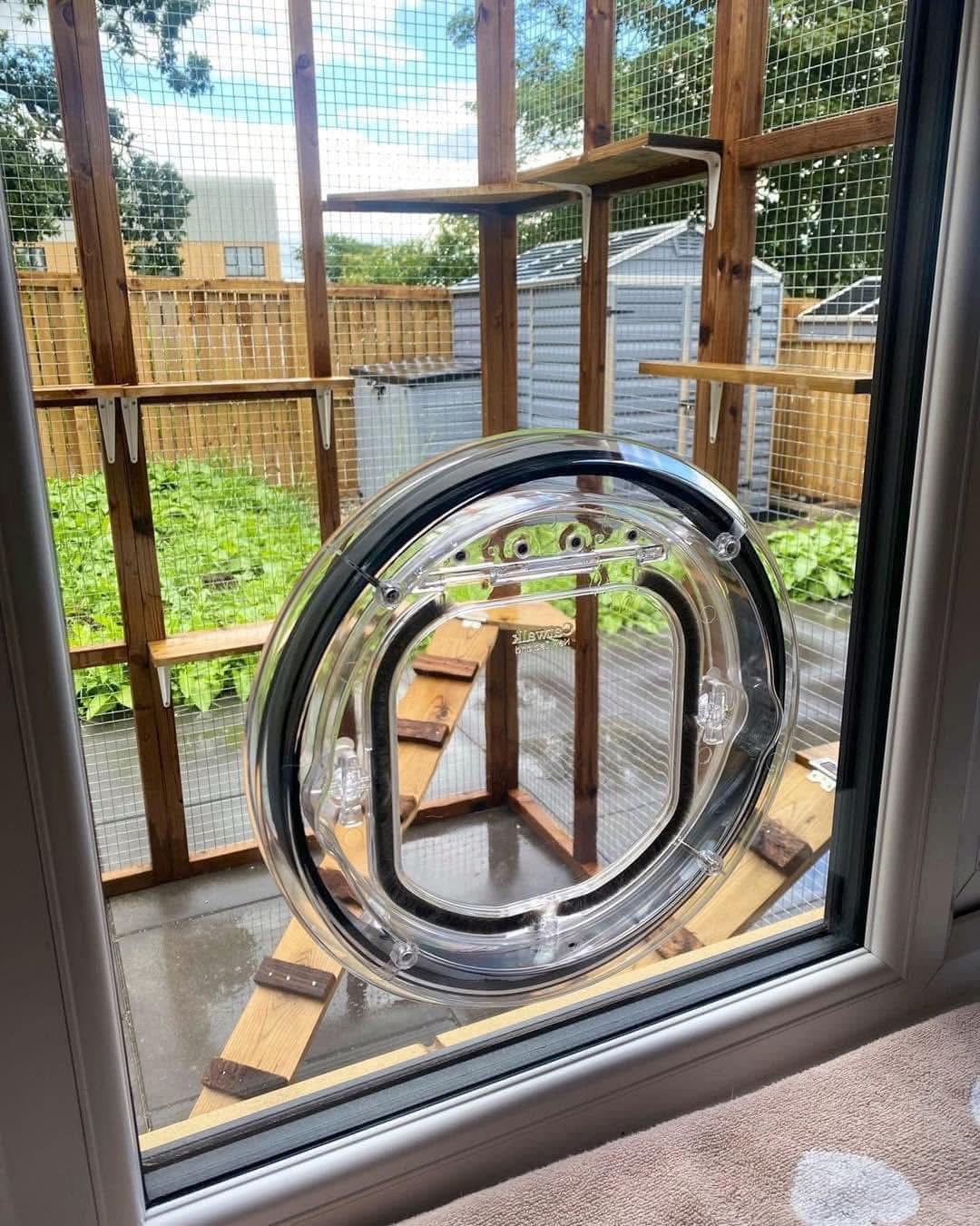
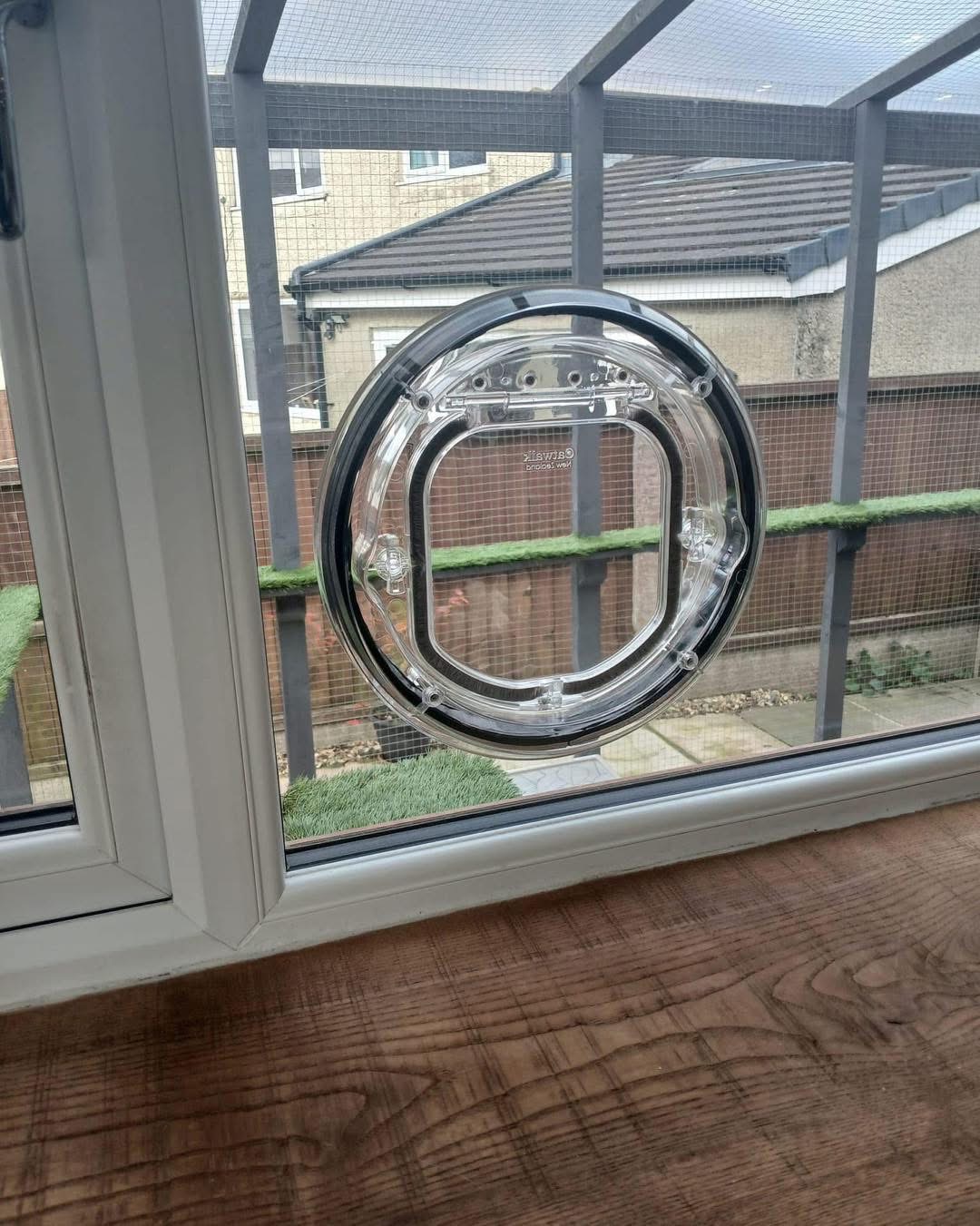
• Photos of the finished install, inside and out
• The flap manufacturer's warranty card
• For glass installs, the glass spec sheet showing toughened/laminated to BS EN 12150 or BS EN 14449
That package answers any insurer's reasonable question.
Common Myths Debunked
Myth: 'A cat flap voids my insurance.' No mainstream UK home insurer treats a standard cat flap as a policy-voiding alteration.
Myth: 'A cat flap counts as forced entry.' Insurers assess forced entry on whether locks were defeated and security devices bypassed — not on whether the home has a pet door. Read more in our cat flap security guide.
Myth: 'I have to use an insurer-approved fitter.' Home insurance is not double-glazing-installer-specific. Any qualified installer with documented evidence is normally acceptable.
Myth: 'It will increase my premium.' Mainstream insurers do not load premiums for a standard cat flap.
When to Definitely Notify
Notify the insurer if:
• Your policy contains an explicit 'any alteration to external doors or windows' clause
• You're a leaseholder and altering shared glazing (also need freeholder consent)
• You're a tenant (you also need landlord consent — see our rented property guide)
• The property is Grade I or Grade II listed (different rules apply, and listed building consent may be needed)
• You're fitting an unusually large pet door for a medium or large dog
In every other standard case, professional install + evidence on file is enough.
Our Standard Documentation
Every install from us comes with: itemised invoice, photos sent by email, flap manufacturer warranty registered, 3-year workmanship guarantee in writing, and a glass spec sheet for any glass-door job. If your insurer asks, you have everything ready. Request a quote or read more in our warranty guide.