Can a Burglar Get In Through a Cat Flap? Separating Fact from Fiction
The Short Answer
Can a burglar get in through a cat flap? No. A standard cat flap opening is roughly 145–170 mm wide and 145–160 mm tall — roughly the size of a letterbox. No adult human can fit through that.
In over a decade of fitting cat flaps across the North West, we have installed thousands of units and never once had a customer contact us to say a burglary occurred via the cat flap.
That said, sensible habits matter — which is why every modern cat flap we fit is lockable, and why we always advise a few simple precautions alongside installation.
Why the Fear Exists (and Why It's Overblown)
The cat-flap-as-entry-point idea usually comes from three places:
- Horror stories online — often involving old-style dog doors or large pet doors, not standard cat flaps.
- Letterbox fishing — burglars do occasionally use letterboxes to steal keys from hall tables. A cat flap is a different size and usually in a different location, but the same principle applies: don't leave keys visible near any opening.
- General anxiety about home security — entirely understandable, but cat flaps are not the weak point people imagine.
A standard cat flap is simply too small for a person. Even a very slim teenager cannot squeeze through a 160 mm opening. The physics don't work.
How Big Is a Cat Flap Opening, Really?
Here's the reality of the numbers:
• Standard cat flap: ~145–170 mm wide × 145–160 mm high
• Large cat / small dog flap: ~180–220 mm wide × 200–250 mm high
• Adult human shoulder width: roughly 400–500 mm
• Adult human head width: roughly 150–180 mm
Even if someone managed to get their head through (which most adults couldn't), their shoulders, chest and hips would stop them immediately. A cat flap is not a doorway — it's barely bigger than a hardback book.
For comparison, a UK letterbox is typically 250–300 mm wide and 40–60 mm tall. That's the opening burglars have historically exploited for key fishing. A cat flap is smaller in width and far harder to reach through from the outside.
Every Modern Cat Flap Is Lockable
One reason the burglary fear persists is that people assume a cat flap is a permanent open hole. It's not.
Manual flaps (like Pet-Tek) have a four-way locking mechanism:
• In only
• Out only
• Fully locked
• Fully open
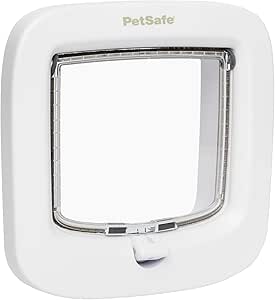
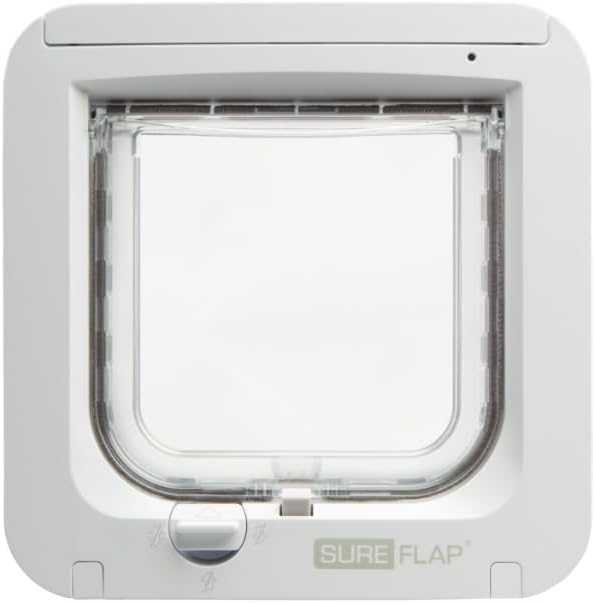
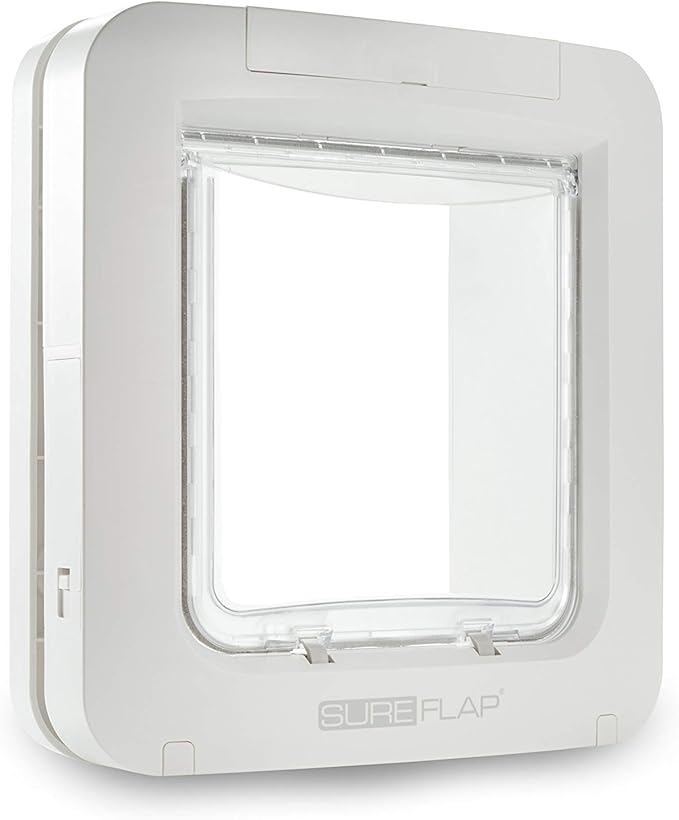
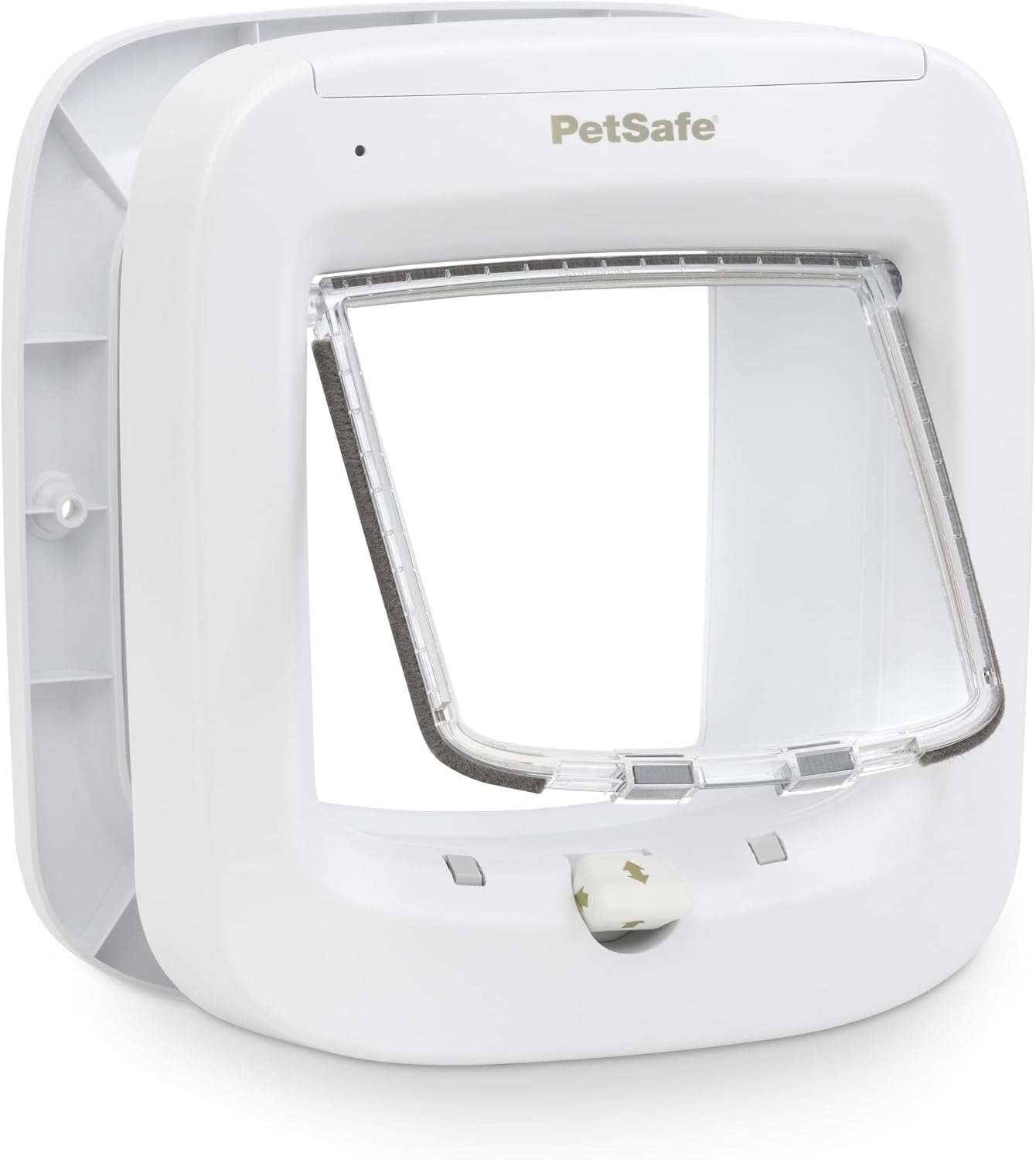
Microchip flaps (like SureFlap and PetSafe) lock automatically when your cat isn't nearby. The flap is physically sealed shut unless a registered microchip approaches.
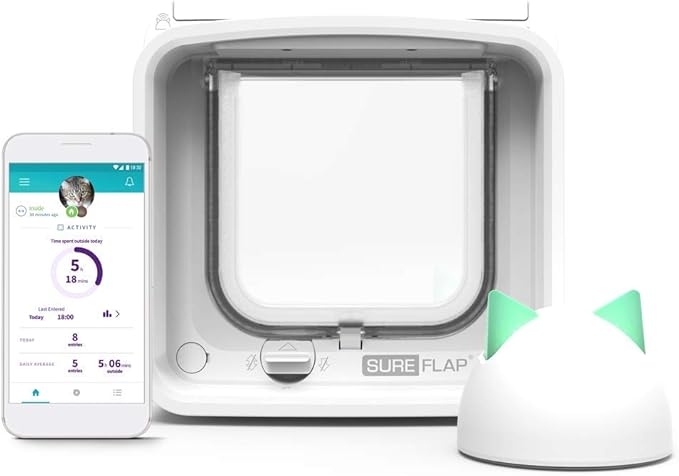
Smart flaps (like SureFlap Connect) add curfew scheduling — you can set the flap to lock itself at night and unlock in the morning, automatically.
When you're away on holiday or simply want the house sealed overnight, every single flap we fit can be locked. The opening becomes a solid, sealed panel just like the rest of your door or glass unit.
Simple Precautions That Matter More Than the Flap
Rather than worrying about the cat flap, we advise customers to focus on the habits that actually prevent burglaries:
• Don't leave keys in the door or on a hall table near any opening — letterbox, cat flap or window. This is the most common exploit route, not the opening itself.
• Use the lock — when you're out or asleep, set the flap to fully locked. It takes two seconds.
• Check with your insurance company — most UK insurers have no issue with professionally fitted cat flaps, but it's worth confirming. Some policies ask whether you leave keys in locks or near entry points.
• Consider a microchip flap — the automatic locking adds a layer of physical security without you having to remember.
• Think about placement — we often fit cat flaps in corners of doors or glass panels where they're less visible from the street, and where reaching through would be physically awkward.
What About Reaching Through?
Some people worry about a burglar reaching an arm through the flap to unlock the door from the inside.
On a standard cat flap, this is practically impossible:
• The opening is too small for an adult arm to get through with any useful range of motion
• Modern doors (UPvc, composite, bi-fold glass) don't have thumb-turn locks or handles positioned where a reaching hand could operate them
• Most UK doors have multi-point locking systems that can't be unlocked by hand from the inside without significant leverage
If you have an older door with a simple latch or thumb-turn lock near the cat flap location, mention it to us during the quote. We can advise on positioning or suggest a microchip flap with a more rigid, sealed closing mechanism.
The honest truth: if a burglar is determined enough to try reaching through a 160 mm hole, they'd find a dozen easier ways into the property first.
Our Experience: Thousands of Installations, Zero Reports
We've been fitting cat flaps across Manchester, Cheshire, Liverpool, Lancashire and the wider North West for years. The numbers speak for themselves:
• Thousands of installations completed
• Zero customers have ever contacted us to report a burglary via a cat flap
• Hundreds of microchip flaps fitted in urban areas where security concerns are highest — still no issues
The most common follow-up message we get isn't about security — it's about how much the cat loves their new independence.
That's not to say burglaries don't happen. They do, and they're devastating. But in our professional experience, a properly fitted, lockable cat flap poses no meaningful additional risk over the door or window it's installed in.
What If You're Still Unsure?
If the security question is stopping you from getting a cat flap, here are your options:
- Choose a microchip flap — SureFlap or PetSafe models seal shut automatically when your cat walks away. No chip, no entry.
- Fit into glass, not the door frame — a cat flap in a toughened glass unit is physically separated from the door's locking mechanism and far from any internal handles.
- Opt for a fixed side panel — on bi-folds or patio doors, fitting into a non-opening panel removes any theoretical concern about door operation.
- Talk to your insurer — most are completely relaxed about professionally fitted cat flaps, especially lockable and microchip models. Get it in writing if it helps your peace of mind.
- Ask us — we're happy to discuss positioning, flap choice and any specific concerns before we quote. No pressure, ever.
Bottom Line
Cat flaps are too small for human entry. They're lockable. They're fitted by professionals who understand your concerns. And in thousands of real-world installations, they've proven to be a non-issue for home security.
The best thing you can do for security is use the lock when you need it, and don't leave keys visible near any external opening — letterbox, window or otherwise.
If you're considering a cat flap but the security question has held you back, we hope this puts your mind at ease. If you'd like to talk it through or get a quote for your specific door or window, send us a message — we're here to help, not to sell.
Shop Microchip Cat Flaps on Amazon:
Manual Cat Flaps: