Cat Flap Height From the Floor: The Definitive UK Guide
The Standard Measurement
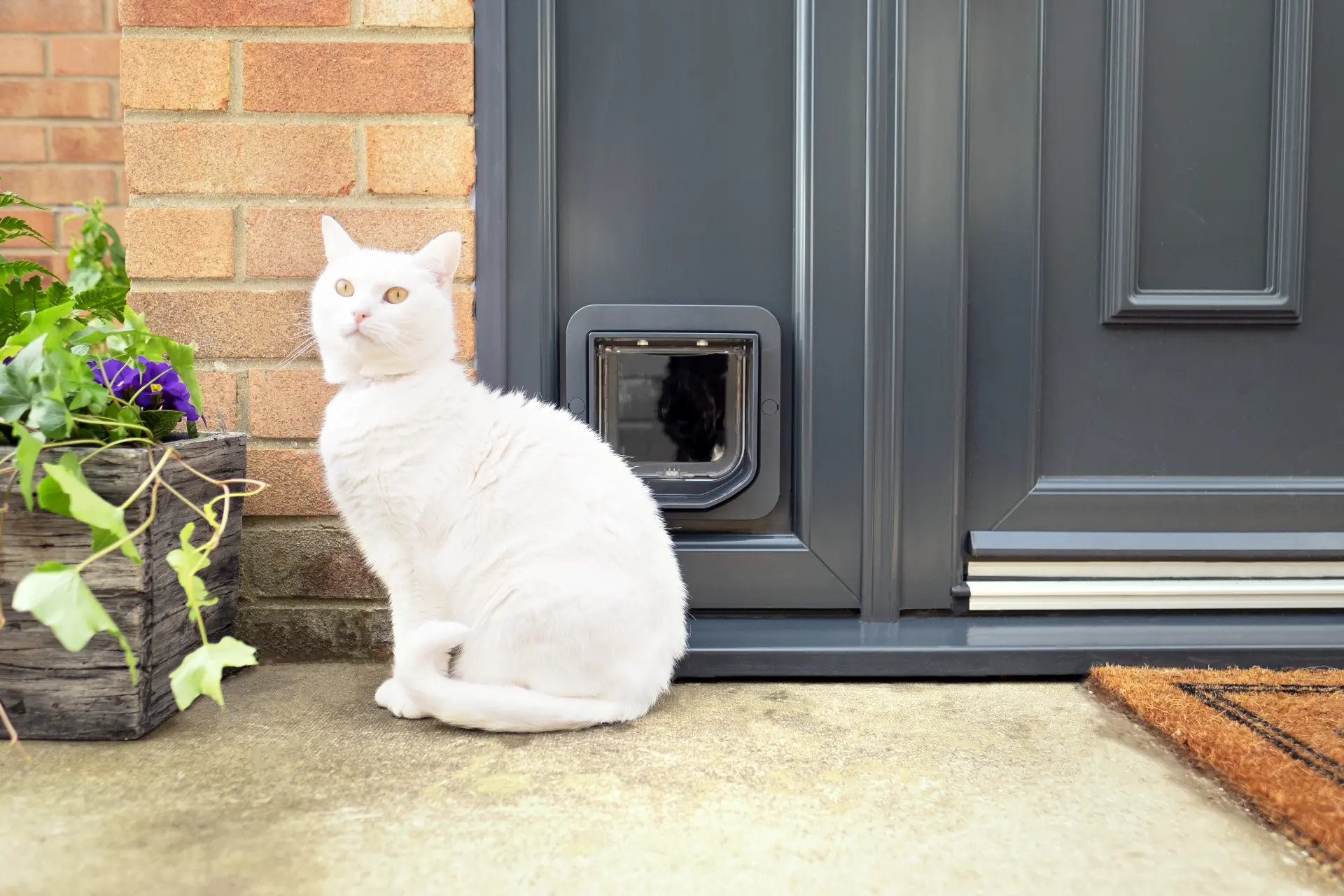
For an average adult cat (3.5–5 kg, ~25 cm shoulder height), the bottom of the flap aperture should sit 100–150 mm (4–6 inches) above the floor or threshold. That puts the centre of the flap at roughly 200–250 mm — comfortable belly clearance without forcing a high step.
The most common figure we use on uPVC and composite doors is 120 mm to the bottom of the aperture.
Why Not Lower?
It's tempting to fit the flap as low as possible 'so the kitten can use it'. We don't, for three reasons:
- Door strength. Most uPVC and composite doors have a steel or reinforced section in the bottom 100 mm. Cutting into it weakens the door and can void manufacturer support. See our composite door guide.
- Threshold seal and weather bar. Modern doors have a weather bar across the bottom — fitting too low means the flap aperture overlaps it and you get water ingress.
- Floor splashback. Rain bouncing off the patio sprays through a low flap onto your kitchen floor.
Why Not Higher?
A flap fitted at hip height looks neater but cats hate jumping through a hole. Above ~200 mm to the bottom of the aperture and you'll see hesitation, particularly with:
• Senior cats with arthritis
• Overweight cats
• Kittens still growing into their legs
• Short-legged breeds (Munchkin, some British Shorthairs)
Special Cases
Kittens (under 6 months): fit at the standard adult height — they grow fast. If you have *only* a kitten and no adult cats, you can drop to 80 mm temporarily, but plan for the long term.
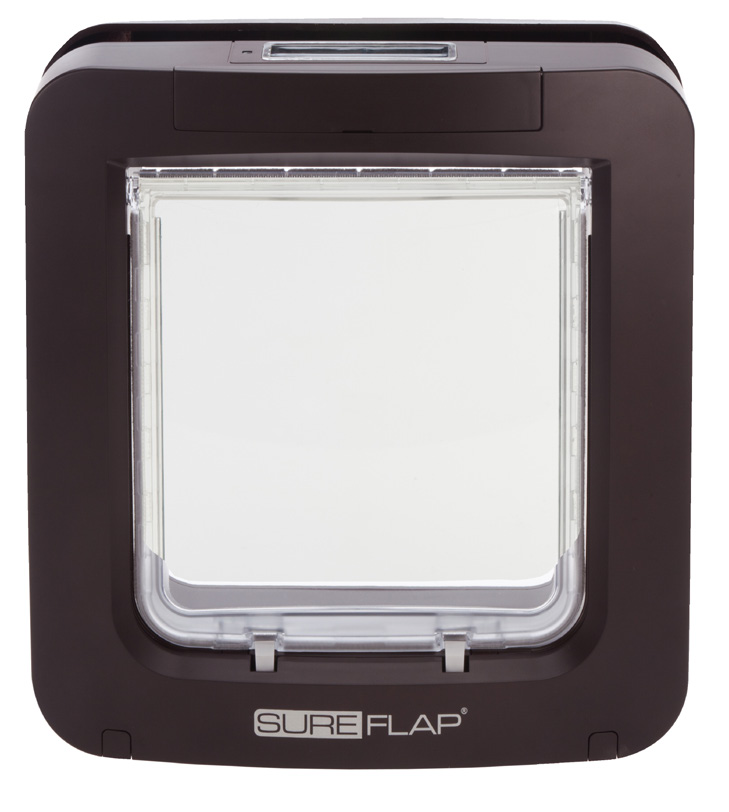
Senior or arthritic cats: drop to 80–100 mm and consider a Pet-Tek or SureFlap flap with a low-resistance magnetic catch.
Large breeds (Maine Coon, Norwegian Forest, Ragdoll): keep at 100–120 mm but choose a large-cat flap like the Pet-Tek Cat Mate 235 or the Closer Pets 300.
Cats with mobility issues / three-legged cats: 70–90 mm, paired with a ramp on the outside if there's a step down to the patio.
Glass Door Heights Are Different
On a glass door we have more flexibility — there's no steel reinforcement to avoid. We still recommend 120 mm to the bottom of the aperture for the same ergonomic reasons, but we can go as low as 80 mm if needed for a senior or disabled cat. The replacement toughened pane is cut at the factory to whatever height you specify.
See our glass door fitting service for the full spec.
How We Measure on Site
On the day of install we:
- Watch your cat hop through a similar-height opening (we carry a template)
- Confirm the door's reinforcement zone with a magnet sweep
- Mark the aperture in pencil and get your sign-off before cutting
- Cut the aperture (or fit the pre-cut glass panel)
- Bed the flap frame in low-modulus silicone for a draught-free seal
No guesswork — every height is set for *your* cat.
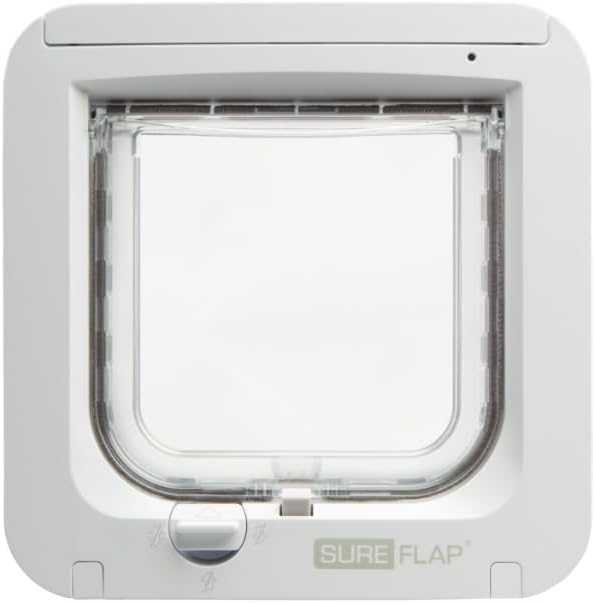
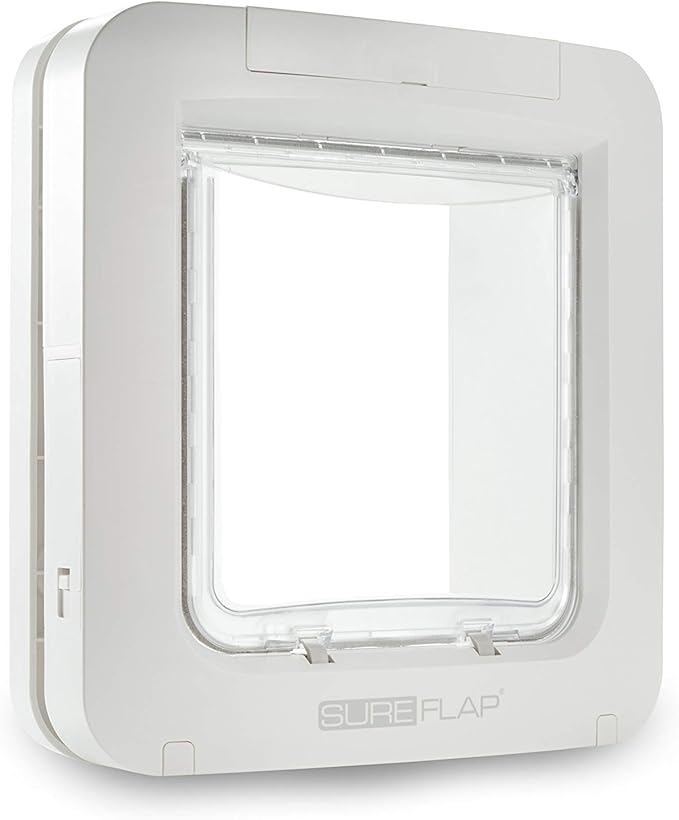
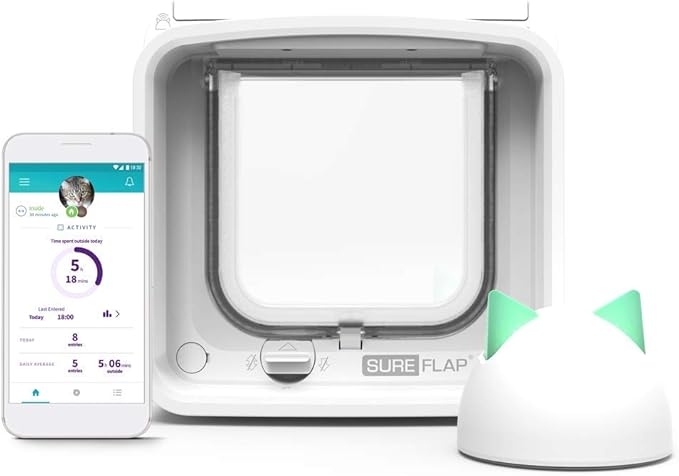
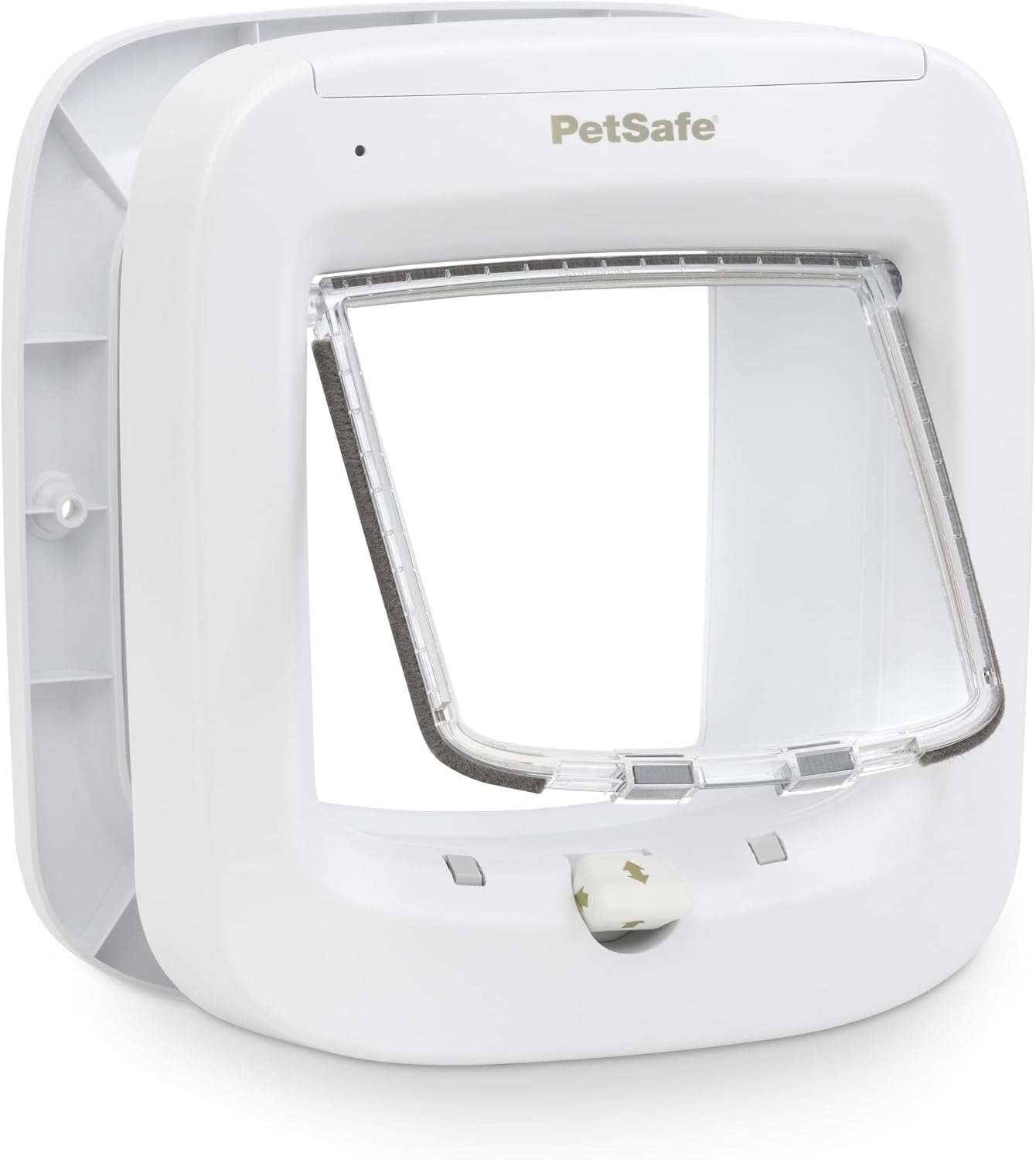
Shop Microchip Cat Flaps on Amazon:
Manual Cat Flaps: