The Curious History of the Cat Flap: From Isaac Newton to Microchip Tech
The cat flap feels like a modern convenience — a bit of plastic, a magnetic seal, maybe a microchip reader. But the idea of a small door cut just for the cat is genuinely ancient. Cats have been demanding their own front door since well before central heating, and humans have been politely obliging for at least 600 years.
Here's the surprisingly entertaining history of how we got from medieval cat holes to today's app-connected pet doors.
Did Isaac Newton really invent the cat flap?
It's the story every British cat owner has heard at least once: Sir Isaac Newton, while working on his optics experiments at Trinity College Cambridge in the 1660s, was so often interrupted by his cat scratching at the door that he cut a hole in it. And, the legend goes, when the cat had kittens, he cut a second smaller hole for them.
It's a brilliant story. It's also almost certainly not true.
The earliest written version of the tale appears in a 1827 book — over 100 years after Newton's death — and no contemporary source mentions it. Newton's biographers, including the meticulous Richard S. Westfall, find no evidence he ever owned a cat. The 'two holes for the kittens' detail is the giveaway: kittens, being kittens, would happily use the big hole.
The story is a Victorian after-dinner joke that stuck. The truth is humbler: people had been cutting holes in doors for cats for centuries before Newton was born.
Medieval cat holes: the original cat flap
Walk into any properly old English barn, mill or cottage and you may still spot one — a small rectangular opening cut into a door, usually about 6 inches square, sometimes with a worn lintel where generations of cats have rubbed past.
These are 'cat holes' or 'cat squeezes', and they've been documented in English vernacular architecture since at least the 14th century. Granaries and dairies needed cats to control mice and rats, and farmers needed their cats to come and go without humans constantly opening doors. The simplest solution was a hole. No flap, no door, just a hole.
The famous Exeter Cathedral cat hole, cut into the door at the base of the astronomical clock around 1598, is probably the oldest surviving named example. The cathedral even paid the cat a wage — 13 pence a quarter, recorded in the accounts — for keeping mice off the clock mechanism.
The Victorian flap arrives
The actual hinged 'flap' — a swinging panel that closes behind the cat — is a Victorian invention. As houses became better insulated and middle-class homeowners cared more about draughts, the open hole stopped being acceptable.
Patents for spring-loaded pet doors begin appearing in British and American records from the 1860s onwards. Early designs were essentially miniature versions of the cat-and-dog-door we know today: a wooden or metal frame, a hinged flap, sometimes a spring to pull it shut.
By the early 1900s the cat flap was a standard fixture in any home with a cat and a back door.
The magnetic revolution: 1970s
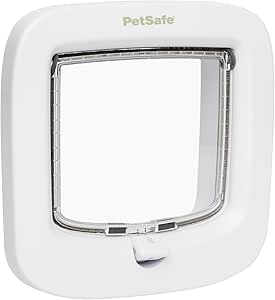
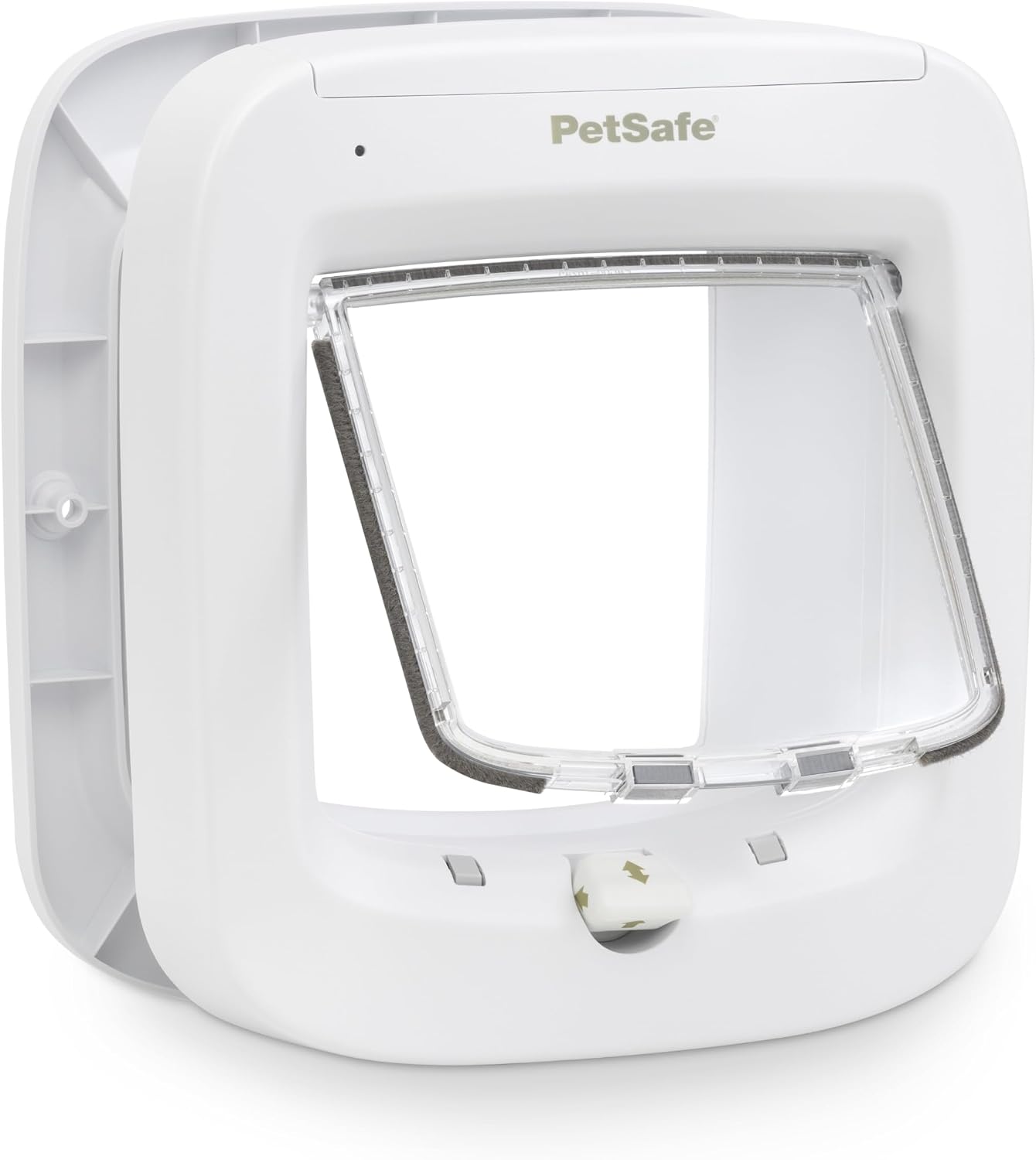
The next leap was the magnetic flap, which arrived commercially in the UK in the 1970s. Brands like Staywell (now PetSafe) pioneered the idea of a small magnet on the cat's collar that triggered a catch in the flap, so neighbouring cats couldn't wander in.
It was clever, but imperfect — collars got lost, magnets sometimes failed, and a determined neighbour cat with a similar-strength magnet could occasionally fool the system. Anyone who owned a cat in the 80s or 90s probably remembers fishing the magnet out from under the sofa.
Microchip flaps: 2008 onwards
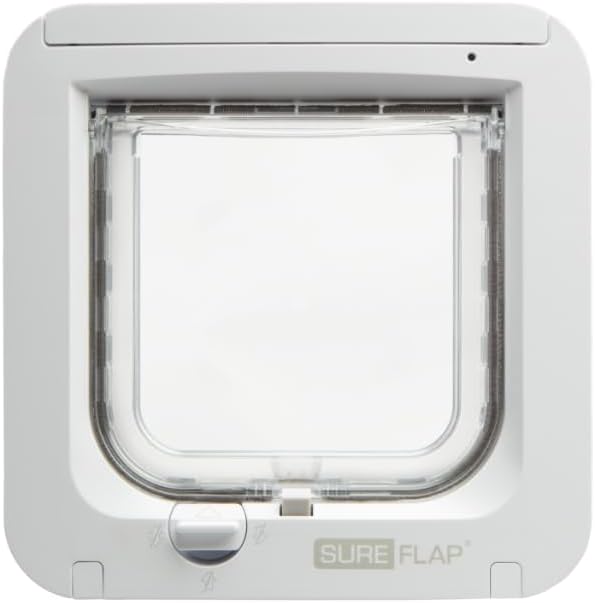
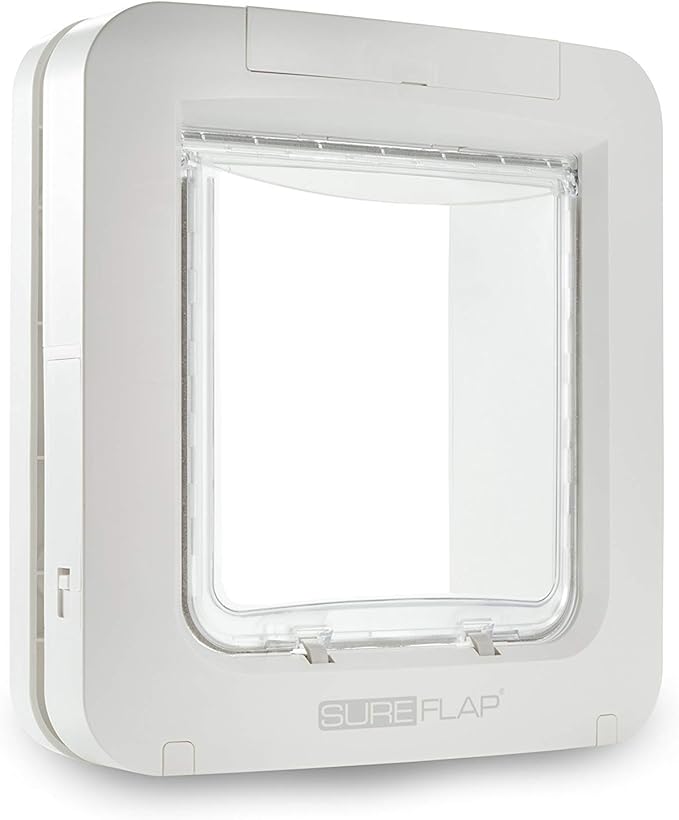
The real game-changer came in 2008 when a British company, Sureflap (founded by Cambridge engineer Dr Nick Hill), launched the world's first cat flap that read the cat's existing vet microchip. No collar needed. No way for the neighbour's tabby to copy the credentials.
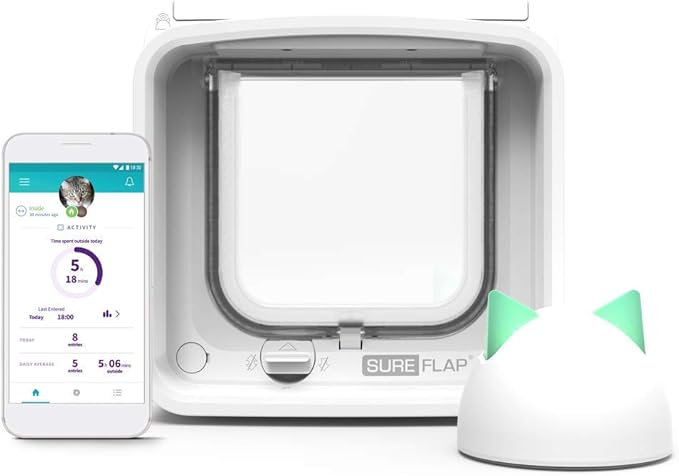
Within a few years, microchip flaps became the new default. Today the SureFlap Microchip Cat Flap and SureFlap Microchip Pet Door are the single most-installed flaps in the UK — we fit dozens every week — and the technology has expanded to include dual-scan (separate in/out permissions per cat), curfew timers, and even app connectivity.
A fitting end for a piece of technology that started as a hole in a barn door.
What's next?
Current development is focused on prey detection — flaps that use a camera and AI to refuse entry to a cat carrying a mouse or bird in its mouth. The first commercial models are already appearing, though they're not yet reliable enough for mass installation.
Given 600 years of cat-door history, it's safe to say cats will keep getting more clever doors. And humans, as always, will keep installing them.
And in case you were wondering
If you'd like a properly modern cat flap fitted into a glass, uPVC, composite or wooden door — without cutting a hole yourself or hoping the Newton story is true — we cover Manchester, Liverpool, Cheshire, Staffordshire, Yorkshire and North Wales. Glass installs from £280, uPVC from £60, microchip flaps fitted in around 90 minutes.
Shop Microchip Cat Flaps on Amazon:
Manual Cat Flaps: