Who Invented the Cat Flap? The Isaac Newton Myth (Debunked)
The Short Answer
Nobody knows who invented the cat flap — because holes cut in doors for cats predate Isaac Newton by at least 300 years. The Newton attribution comes from a single 1802 anecdote published nearly 80 years after his death, with no supporting evidence, and it contains an obvious logical flaw (kittens follow their mother through the big hole — they don't need their own).
The earliest written reference to a cat door in English is in Geoffrey Chaucer's *The Miller's Tale* (c. 1380) — nearly 300 years before Newton was born.
The Newton Story (and Why It's Almost Certainly False)
The story first appears in an 1802 book, *The Life of Sir Isaac Newton* by John Maunder, and is later repeated by various Victorian biographers. It goes: while at Trinity College, Cambridge, Newton became frustrated by his cat scratching to be let in and out during his experiments on optics. He cut a large hole in his door for the cat — and, when she had kittens, a second smaller hole beside it.
The problem is:
• No contemporary source mentions it. Newton's own notebooks, letters, and the meticulous biographies written by people who actually knew him (Stukeley, Conduitt) say nothing about a cat, let alone a cat flap.
• Trinity College fellows didn't own doors. Rooms were shared and doors were college property — cutting holes in them would have got Newton fined, not celebrated.
• The kitten hole is nonsense. Kittens follow their mother. Any cat owner knows this. The anecdote falls apart on first inspection.
Historians of science — including Newton biographer Richard Westfall — treat the story as apocryphal: a charming Victorian invention, not history.
Chaucer's Cat Door (c. 1380) — the Real First Reference
In *The Miller's Tale*, Chaucer describes a servant peering through a hole in a door made for the household cat:
> *"An hole he foond, ful lowe upon a bord, Ther as the cat was wont in for to crepe..."*
Rough translation: *"He found a hole, low down on a board, where the cat was accustomed to creep in."*
This is nearly three centuries before Newton was born. Cat holes in doors were clearly commonplace enough in 14th-century England that Chaucer used one as a casual plot device — no explanation needed for his audience. Similar cat-sized openings appear in medieval barn doors across Europe, cut so working cats could hunt vermin at night without needing a human to let them in and out.
A Rough Timeline of the Cat Flap
• c. 1380 — Chaucer references a cat hole in *The Miller's Tale*. The earliest known English reference.
• Medieval Europe — Barn doors and pantry doors routinely have cat-sized openings for working mousers.
• c. 1660s — Isaac Newton (allegedly) cuts a cat hole in a Cambridge door. First recorded 1802. Almost certainly folklore.
• 19th century — Hinged flaps (rather than open holes) begin to appear on interior doors in wealthier households, mostly for indoor cats.
• 1950s–60s — Mass-produced plastic four-way locking cat flaps (in/out/in-only/out-only) become widely available in the UK and US.
• 1991 — Cat Mate launches the first widely available magnetic cat flap, using a magnet on the cat's collar to unlock the flap.
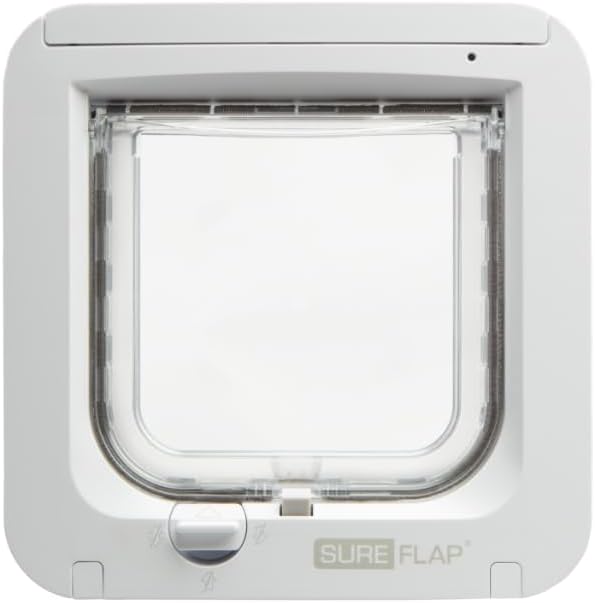
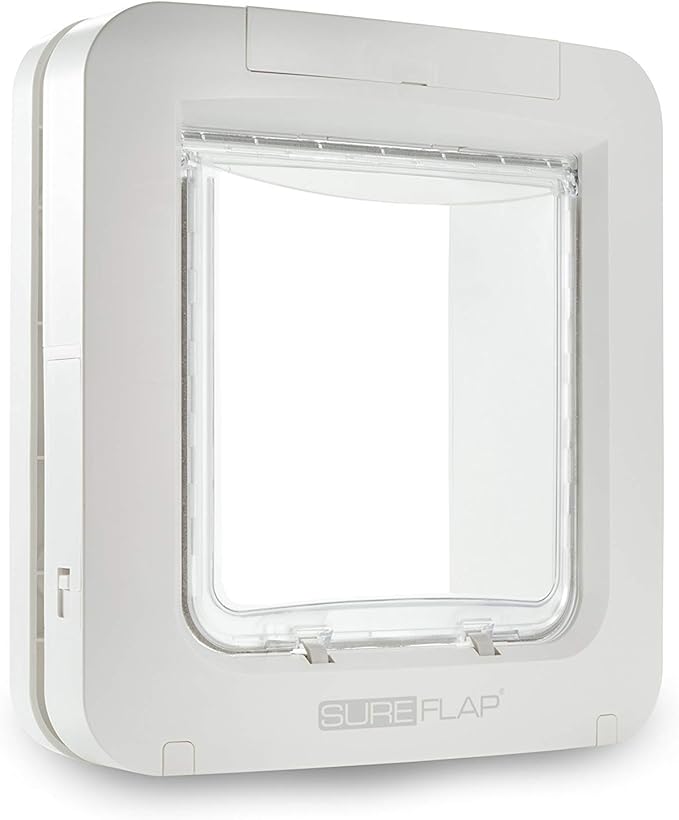
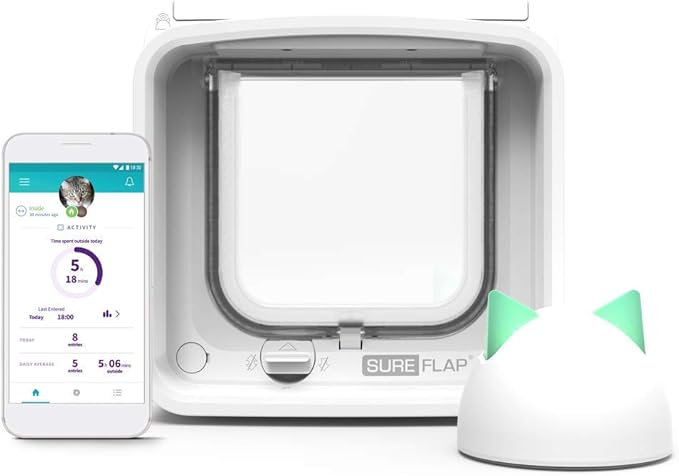
• 2007 — SureFlap launches the first commercial microchip cat flap, reading the pet's existing veterinary microchip. This ends the era of collar-based selective entry and remains the dominant UK technology today.
• 2020s — AI-based prey detection (OnlyCat, launched 2023) uses onboard cameras to block a cat carrying prey from entering the house. This is the current cutting edge — see our OnlyCat cat flap installation page for detail.
So Who *Did* Invent the Modern Cat Flap?
There is no single inventor of the hinged, weather-sealed cat flap most UK households now recognise. The design evolved gradually:
• The basic hinged flap with weather seal was a mid-20th-century evolution of the medieval cat hole, driven by mass-produced plastics and rubber gaskets.
• The four-way lock (in/out/in-only/out-only) is generally credited to Staywell (a UK brand later absorbed into PetSafe) in the 1970s.
• The magnetic collar-key flap was popularised in the UK by Cat Mate / Pet Mate (Closer Pets) in 1991.
• The microchip flap — the biggest single leap in cat flap technology — was invented by Dr Nick Hornby and commercialised by SureFlap (now Sure Petcare / part of Antelliq) in Cambridge in 2007. Cambridge again, coincidentally — but 340 years after Newton.
• AI prey-detection flaps were pioneered by OnlyCat (UK, launched 2023).
So if you want a *real* Cambridge cat-flap inventor: it's Nick Hornby, 2007. Not Newton, 1665.
Why the Newton Myth Won't Die
The Newton story survives because it's a perfect anecdote: a famous genius, a mundane problem, a witty solution, a punchline about the kittens. It humanises one of history's most intimidating minds. It's shared in schoolbooks, on quiz shows, and by tour guides at Trinity College to this day.
But the historical evidence is essentially nil. The next time someone tells you Isaac Newton invented the cat flap, you can politely point them at Chaucer — and at the fact that kittens, being kittens, follow their mother through whichever hole she uses.
Cat Flaps Today: A Long Way From a Hole in a Board
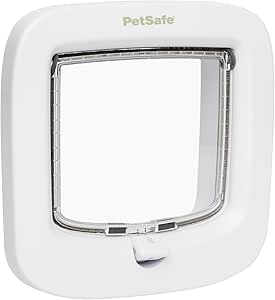
Modern cat flaps have come a long way from Chaucer's *"hole, ful lowe upon a bord"*. Today's options include:
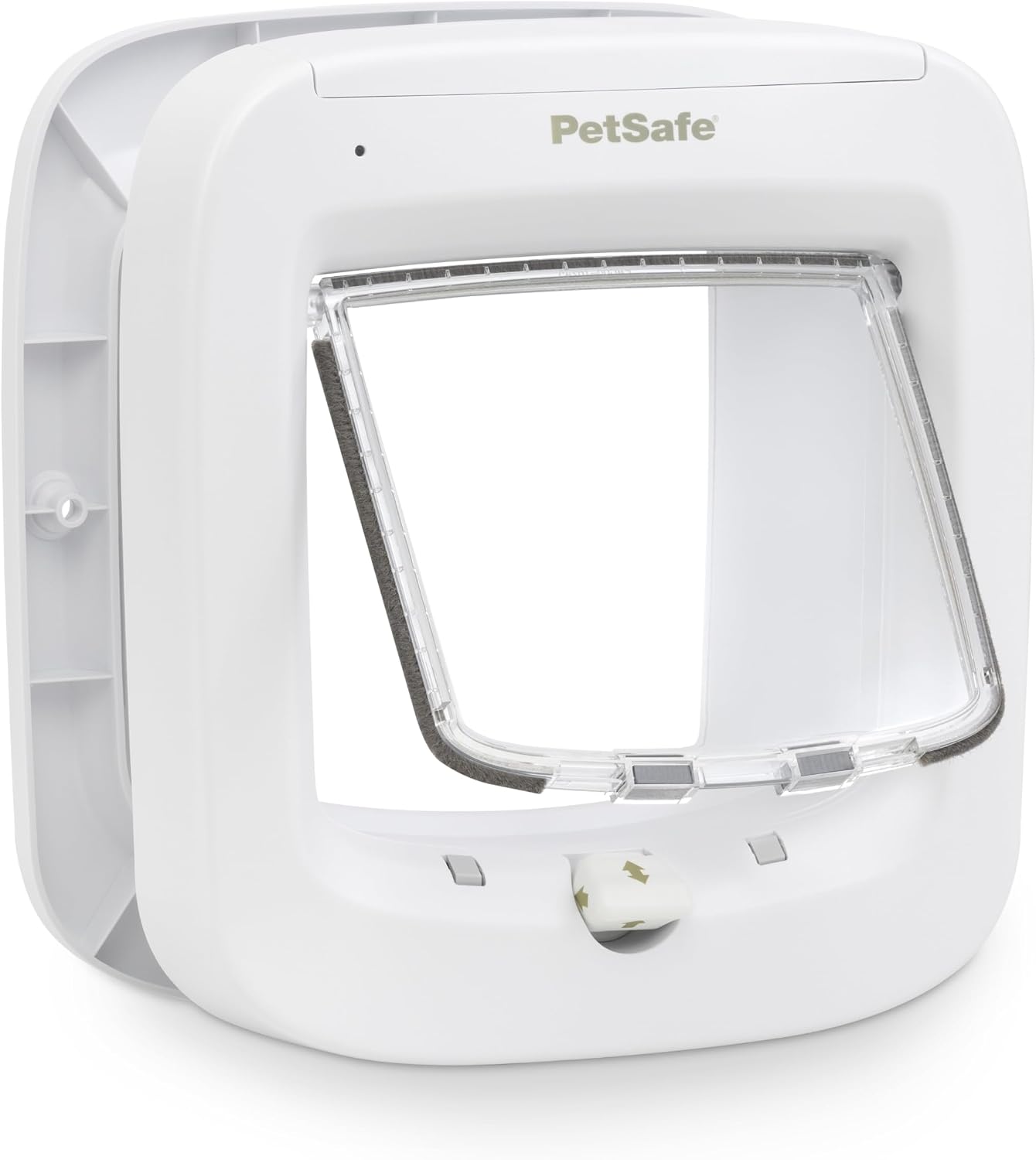
• Microchip flaps (SureFlap, PetSafe) — read your cat's existing vet chip, no collar needed.
• AI prey-detection flaps (OnlyCat) — camera-based, block a cat carrying prey.
• Heavy-duty flaps for large cats (Pet-Tek) — for Maine Coons, Ragdolls and small dogs.
• Manual four-way locking flaps (Closer Pets) — reliable, no batteries.
We fit all of the above into glass doors, uPVC doors, composite doors and windows across the North West, North Wales and Yorkshire.
Unlike Newton, we won't cut a hole in your college door. But we will fit a proper, weather-sealed, factory-cut installation with a 3-year workmanship guarantee. Get a free quote.
Shop Microchip Cat Flaps on Amazon:
Manual Cat Flaps: