How to Replace an Old Cat Flap Without Damaging Your Door or Glass
Quick Answer: Will the New Flap Fit the Old Hole?
- Remove the inner surround and measure the aperture — the actual hole through the door — not the outside of the old flap.
- Compare it with the new flap's stated cut-out size. Most microchip and manual flaps use 170mm circular; older Staywell and budget flaps are often smaller.
- New flap's cut-out is the same or smaller → straight swap. The new surround covers any minor difference.
- New flap needs a bigger hole → in uPVC, composite, wood or aluminium the aperture can be enlarged. In glass it cannot — you need a new toughened panel with the hole pre-cut.
- Old hole is bigger than the new flap → use a mounting adapter or a larger-surround model rather than filling the gap.
Adapters exist for most brand-to-brand swaps and are the cleanest way to cover an oversized legacy hole.
Common Cut-Out Sizes
| Flap | Cut-out required | Notes |
|---|---|---|
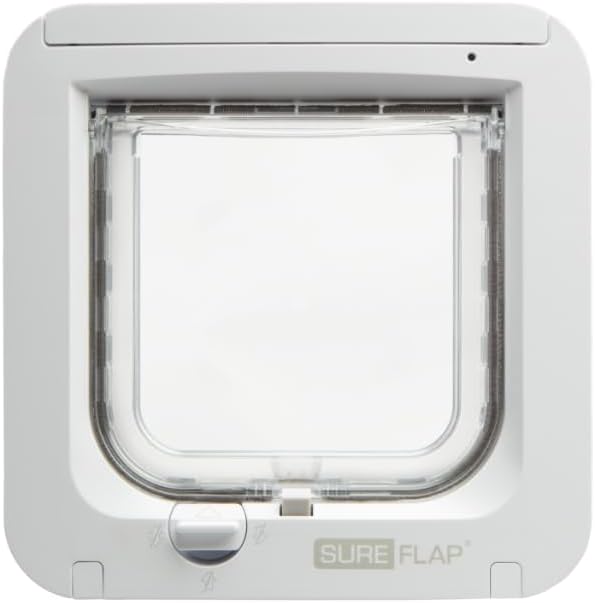
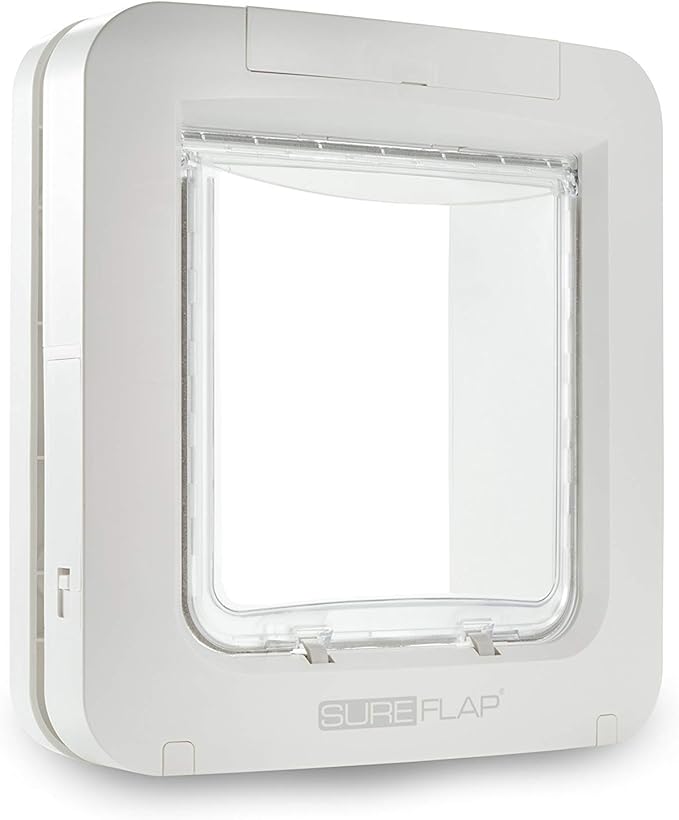
| SureFlap Microchip Cat Flap | 170mm circle | The de-facto UK standard |
| SureFlap DualScan | 170mm circle | Same hole as above |
| SureFlap Microchip Pet Door | 212mm circle | Small dogs / big cats |
| OnlyCat | 212mm circle | Won't fit a 170mm legacy hole |
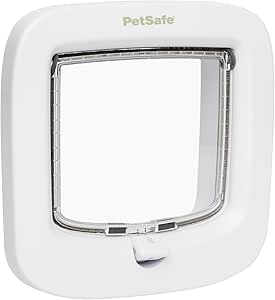
| PetSafe / Staywell 4-way | ~166–172mm | Usually swaps with 170mm |
| Cat Mate Elite | ~165–172mm | Check the model sheet |
| Older budget flaps (pre-2010) | Often 150–160mm | Frequently need enlarging |
Always check the manufacturer's current template for your exact model before cutting anything — sizes change between revisions.
Replacing in uPVC and Composite Doors
This is the most common job and the easiest to get wrong.
Do:
• Undo the internal surround screws and lift the old flap out; expect the sealant to resist.
• Clean off old silicone with a plastic scraper, not a blade — scored uPVC never looks right again.
• If enlarging, use the new flap's template, cut slowly with a jigsaw and a fine downcut blade, and support the offcut so it doesn't tear out on the last few millimetres.
• Seal the cut edge. A composite door's core is absorbent; an unsealed edge lets water in and the door swells from the inside. This is the number-one cause of ruined doors.
Don't:
• Cut near the lock case, hinges or the frame edge — you'll hit reinforcement or weaken the panel.
• Over-tighten the surround screws; they crack the flap housing and pull the panel in.
More detail in can you put a cat flap in a composite door and cat flap in a uPVC door.
Replacing in Glass: Read This First
If your existing flap is in a glass door or window, you cannot enlarge the hole. Toughened glass shatters the moment it's cut or drilled after tempering — there is no technique, tool or specialist that changes this.
So:
• Same cut-out size (e.g. SureFlap → SureFlap DualScan, both 170mm) → straight swap, no new glass needed. Do it yourself or have us do it in under an hour.
• Larger cut-out (e.g. 170mm → OnlyCat's 212mm) → a new toughened unit with the 212mm hole pre-cut, typically from around £280 and 1–2 weeks lead time.
When swapping like-for-like in glass, take the weight of the flap as you undo the surround — a flap dropping against the pane edge is how glass gets chipped. See cat flap installation cost for glass doors.
Upgrading While You're There
Most people replacing a flap are really upgrading. Worth considering:
• Manual → microchip: stops the neighbour's cat coming in, no collar needed. From £60–£90 for the flap. See microchip vs manual cat flaps.
• Single → dual-flap: the biggest draught improvement available. See how to draught-proof a cat flap.
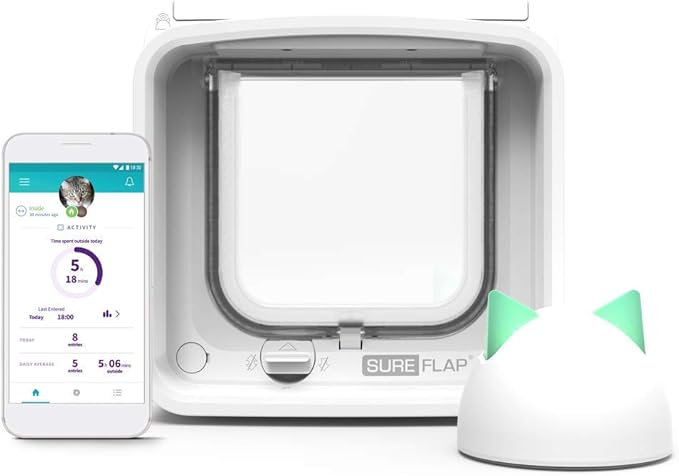
• Microchip → smart/connected: curfews and remote locking from your phone. See our smart cat flap buyer's guide.
• Standard → large: if your cat is a Maine Coon or Ragdoll, the pet-door size is a kinder fit — see cat flaps for large cats.
Check your cat's chip works with the new flap using our microchip compatibility checker.
Tidying an Oversized or Damaged Old Hole
If the previous install left a ragged or oversized aperture:
• Mounting adapters — flat plates that bridge a larger hole and present a clean 170mm opening. The neatest fix, and available for the main brands.
• Larger-surround flaps — some models have wider trims that cover more.
• A new panel — in glass, and sometimes in a badly damaged composite door, replacing the panel is genuinely cheaper than repairing it well.
What not to do: pack the gap with expanding foam and mastic. It looks poor, it doesn't seal reliably, and it traps moisture against the door core.
When to Call a Fitter
A like-for-like swap in uPVC is a reasonable DIY job. Call someone if:
• The new flap needs a larger aperture.
• The door is composite, aluminium, bi-fold or glazed.
• The existing hole is oversized, damp or damaged.
• The door is rented or under a manufacturer's guarantee — get the fitting done properly and documented.
We replace and upgrade flaps across Cheshire, Greater Manchester, Merseyside, Lancashire, Staffordshire, Yorkshire and North Wales, and we carry adapters for the common brand swaps. Check yours with Will It Fit or request a free quote with a photo of the existing flap.
Shop Microchip Cat Flaps on Amazon:
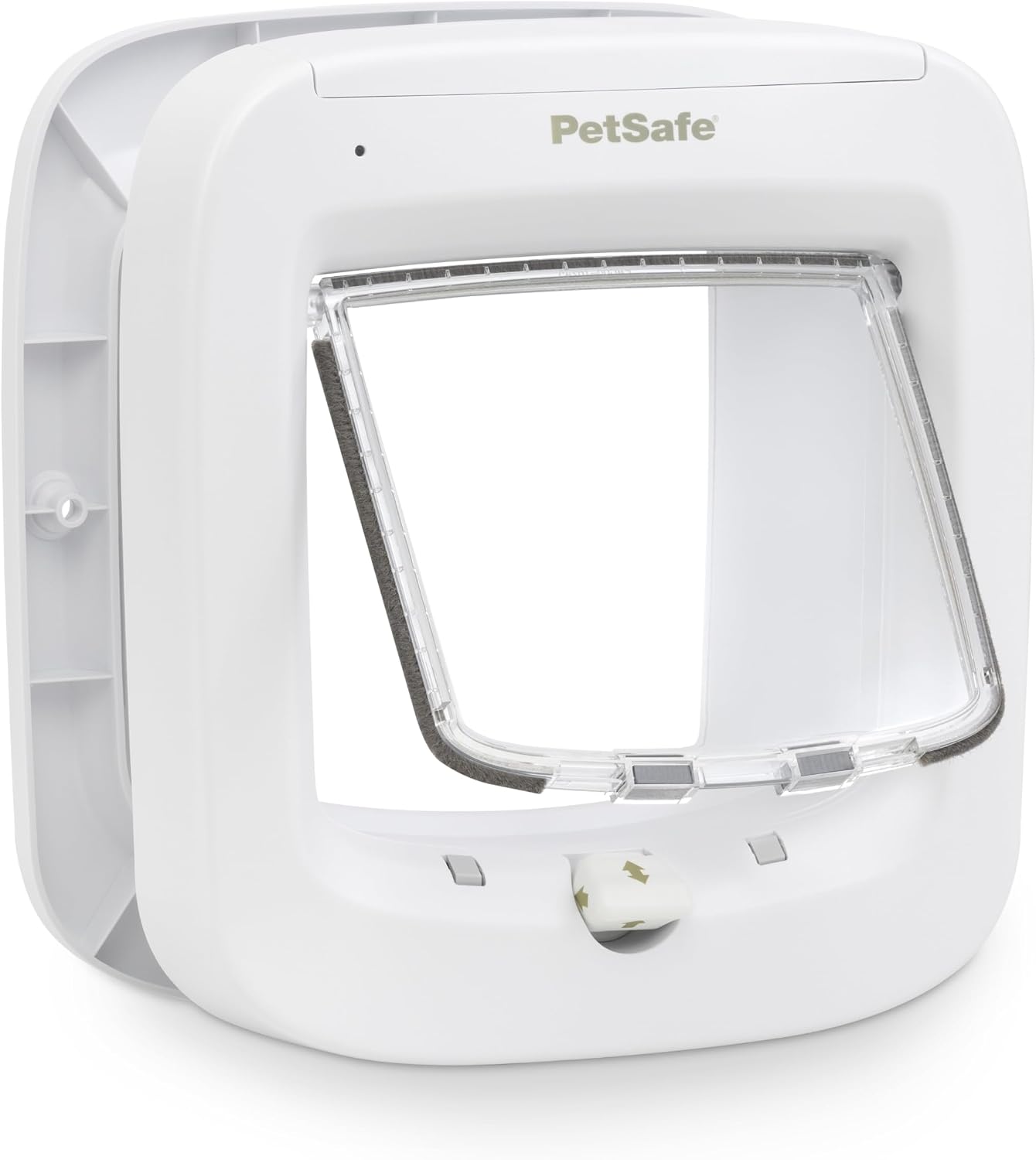
Manual Cat Flaps: