Cat Flap Training: A 7-Day Plan to a Confident Cat
Quick Answer: The Method in One Paragraph
Tape the flap fully open so the cat sees daylight and can walk through without touching anything. Sit on the far side and call your cat through with a high-value treat. Repeat six to ten times a day for two days. Then lower the flap a third at a time, so the cat's head brushes it, then pushes it, then opens it unaided. Reward every single crossing for the first week. That's the whole technique — everything else is patience.
The 7-Day Plan
| Day | What to do | Success looks like |
|---|---|---|
| 1 | Flap taped fully open. Treats either side. Let the cat investigate with no pressure. | Cat sniffs the opening |
| 2 | Lure through 6–10 times both directions. Feed dinner on the far side. | Cat walks through freely |
| 3 | Lower flap one third. Hold it slightly ajar with your hand. | Cat pushes past your hand |
| 4 | Lower to two thirds. Cat now nudges the flap itself. | Cat pushes flap with head |
| 5 | Release the flap fully. Stay nearby and reward every crossing. | Cat opens flap unaided |
| 6 | Stop luring. Let the cat choose to use it. Reward on arrival only. | Unprompted crossings |
| 7 | Set the lock mode you actually want (in-only, curfew, etc.). | Cat uses it without you |
If a day fails, repeat it — don't move on. Cats generalise badly from confusion.
Which Flap Makes Training Easiest?
The mechanism matters more than most owners expect:
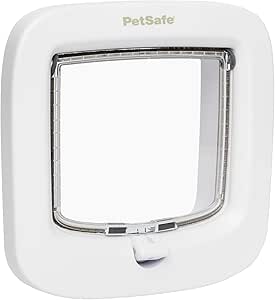
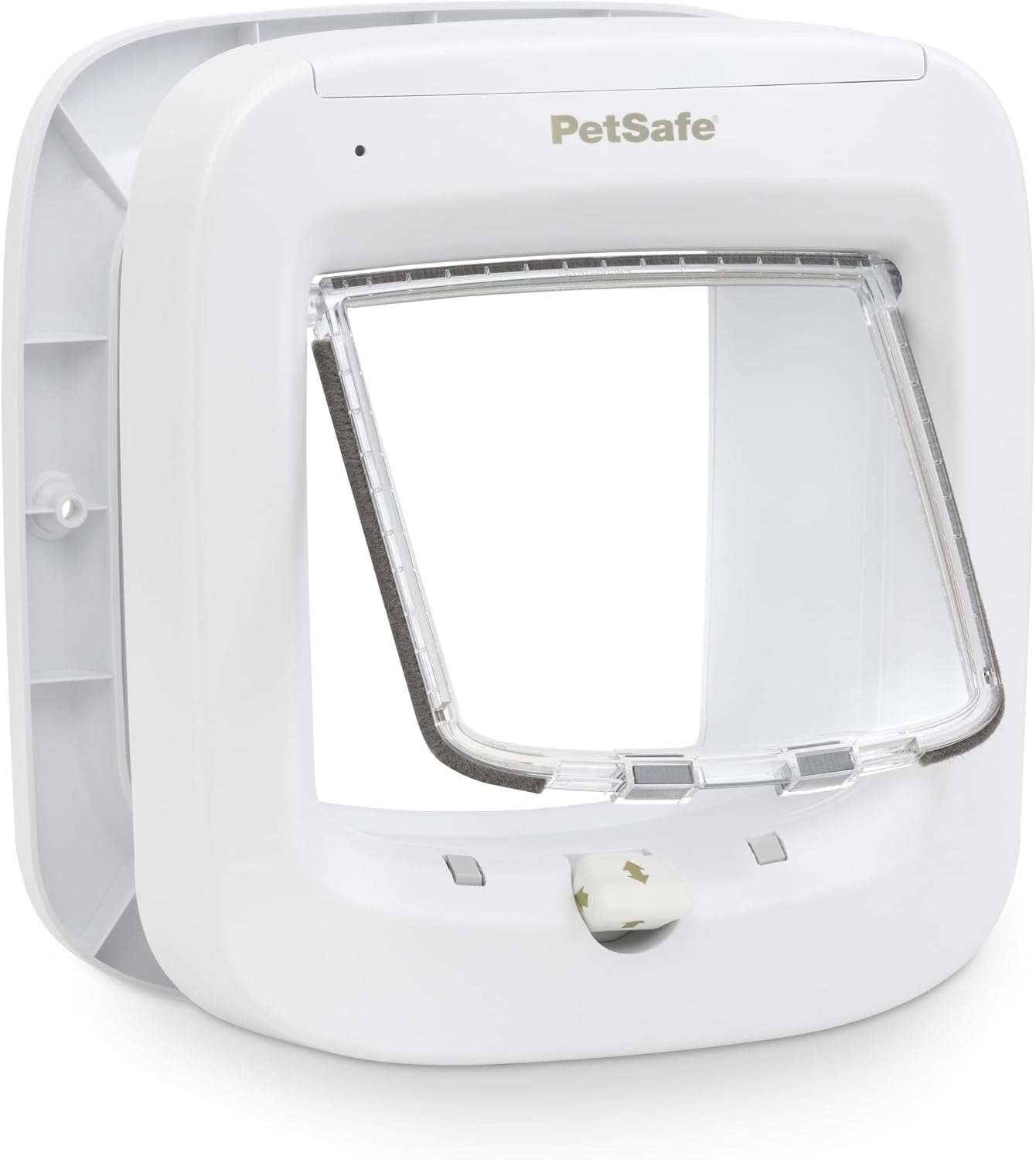
• Manual flaps are the easiest to learn — light, silent, no motor. Ideal first flap for kittens and timid cats.
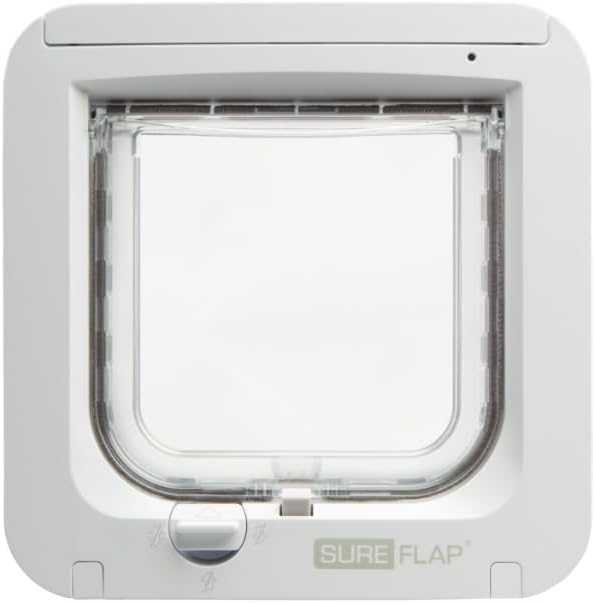
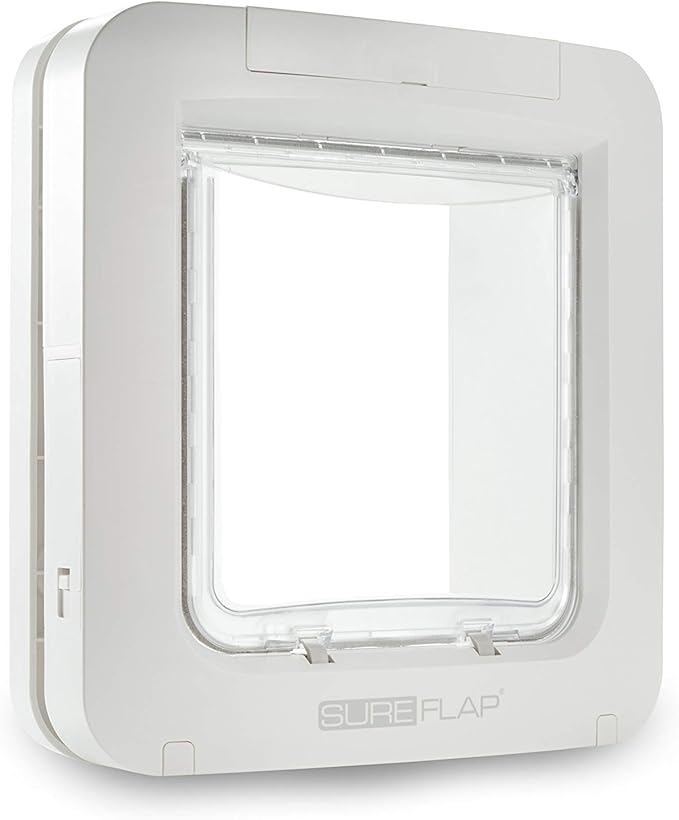
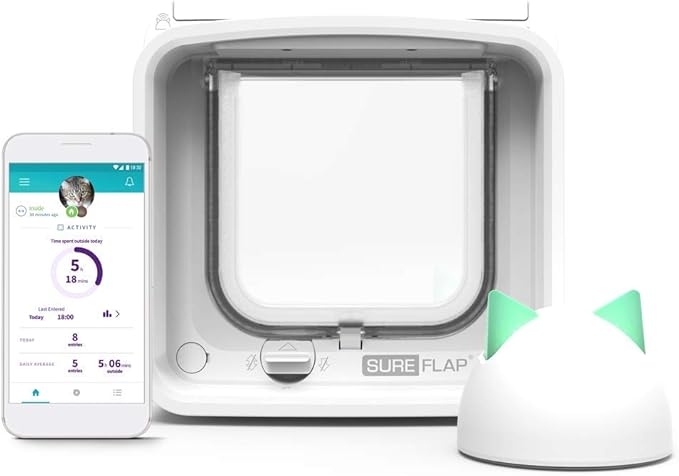
• Microchip cat flaps click and whirr as they unlock. Nervous cats need an extra few days for the noise. Train with the flap set to "unlocked" first, then enable microchip recognition once the cat is confident.
• Heavy dual-glazed or brush-sealed flaps are noticeably stiffer. Small, elderly or arthritic cats can struggle; check the magnet strength setting if there is one.
A SureFlap microchip cat flap is the usual recommendation for households with visiting cats, and a PetSafe manual cat flap is the usual recommendation for a first-time trainee.
The Three Things That Usually Go Wrong
1. The flap slaps the cat on the way out. One startle and a cat will avoid the flap for days. Fix: go back to holding the flap ajar for a week, then release it in smaller increments.
2. The flap is fitted too high. The bottom of the flap should sit at your cat's belly height — usually 100–150 mm from the floor. Too high and the cat has to jump, which nearly all cats refuse. This can't be fixed after cutting, which is why we measure the cat, not the door.
3. The microchip flap doesn't read the chip. Chips migrate; a chip that has slipped down the shoulder may not read at the right angle. Register the cat twice (once entering, once from a slightly lower posture), and check the battery — weak batteries shorten read range long before the low-battery light appears.
Nervous, Rescue and Older Cats
Same plan, three times slower. Additional adjustments that genuinely help:
• Feed every meal within sight of the propped-open flap for a week before you start.
• Use a pheromone diffuser near the door for the training fortnight.
• Train at dusk — most cats are naturally braver at their hunting hours.
• For arthritic cats, add a shallow step both sides. Reluctance is very often joint pain, not fear.
Rescue cats that have never been outdoors should be kept in for at least three to four weeks after moving in, with the flap locked, so the house becomes home first.
Set the Lock Mode Once Training Ends
Once your cat is confident, decide how the flap actually runs day to day:
• 4-way manual lock — in only, out only, both, or locked. Simple and reliable.
• Microchip entry — keeps neighbours' cats out, which is the single most common reason our customers upgrade.
• Curfew timer — locks the cat in overnight automatically, the safest setting for roads.
If your flap isn't fitted yet, our cat flap installation service covers uPVC, composite, wooden, aluminium and glass doors, and we set the height to your cat before cutting. See our full range of picks on the cat flaps page.
Keep the Rewards Coming
For the first month, reward arrivals rather than departures — you want coming home to be the best part. Small, smelly, high-value treats work far better than dry kibble, and a quick play session on arrival cements the habit.
Browse cat toys for reward play, and cat treats and food for training rewards over on That Cat Picks.
Shop Microchip Cat Flaps on Amazon:
Manual Cat Flaps: