Why Is My Cat Scared of the Cat Flap? 9 Fixes That Actually Work
First — Rule Out Physical Problems
Before behavioural training, check the flap itself. In roughly 1 in 8 refusal cases we're called back to, the flap is actually faulty or fitted at the wrong height for the cat. Quick checks:
• Flap height — bottom of the flap should be 8–10 cm from the floor (measured on the cat's side). Higher than 12 cm and small cats struggle to lift themselves through. See our cat flap height guide.
• Flap tension — push the flap with one finger. It should swing open with almost no resistance. If you feel spring resistance the magnet is too strong; some flaps have adjustable tension.
• Battery / microchip flap — if it's beeping, flashing, or the motor is straining, replace batteries. Low batteries make the lock cycle noisily and cats hate the sound.
• Draught seal — if the flap is pinching on the seal, ease it with silicone spray on the seal edge.
If everything checks out, move to the behavioural fixes below.
Fix 1 — Tape the Flap Fully Open (Days 1–3)
The single most effective fix. Use masking tape to hold the flap completely open, propped up so the opening is a clear rectangle. No flap means no clatter, no unfamiliar texture on the whiskers, no trapped feeling.
Leave it taped for 48–72 hours minimum. Most cats will walk through within a day once they realise it's just a hole. Feed on the far side (see Fix 4) to accelerate.
Once they're using it freely, move to Fix 2.
Fix 2 — Half-Open (Days 4–5)
Tape the flap so it hangs at a 45-degree angle — still no need to push through, but they get used to seeing something dangling in the opening. Whiskers may brush it. Most cats accept this within a day.
If they refuse, go back to fully open for another 2 days. Do not rush this step — pushing forward too fast is the #1 reason cats develop long-term refusal.
Fix 3 — Untaped, Frame Only (Day 6+)
Remove the tape entirely. Push the flap gently a few times yourself while the cat watches so they see it swings freely. Sit on the far side and call them through.
Most cats will push through within 1–3 attempts. Reward heavily — food, praise, a favourite toy on the far side. First-through moments are wired hard in cat memory; make it a good one.
Fix 4 — Food Bridge
Cats respond to food more than any other motivator. Move the feeding bowl progressively closer to the flap over 5–7 days:
• Days 1–2: bowl 1 m from the flap on the near side
• Days 3–4: bowl right next to the flap on the near side
• Days 5–6: bowl on the far side, flap fully open (from Fix 1)
• Days 7+: bowl on the far side, flap untaped
Use a high-value food they don't get otherwise — tuna, chicken, Lick-e-Lix. Once through, feed there every meal for a week to build the association.
Fix 5 — Deaden the Clatter
The 'clack' when a flap swings shut startles nervous cats and can trigger permanent refusal. Two proven fixes:
• Felt or thin foam strip stuck to the top edge of the frame where the flap contacts on close. Silences 80% of the noise.
• Silicone-spray the hinges — many flap hinges squeak within weeks. A single spray lasts months.
Avoid WD-40 on plastic hinges (it attacks some polymers). Use pure silicone spray from any hardware shop.
Fix 6 — Deal With Microchip Motor Noise
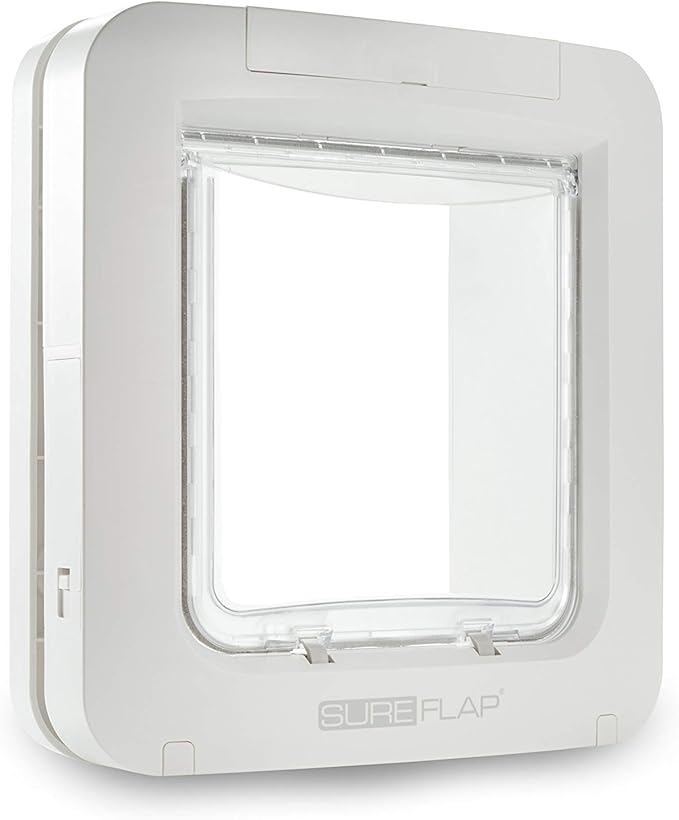
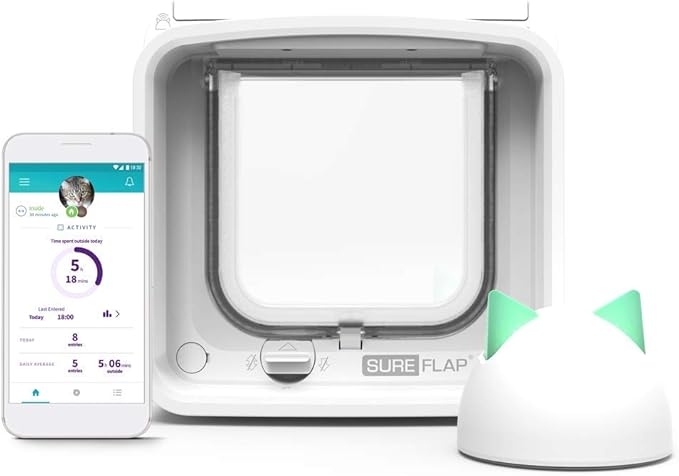
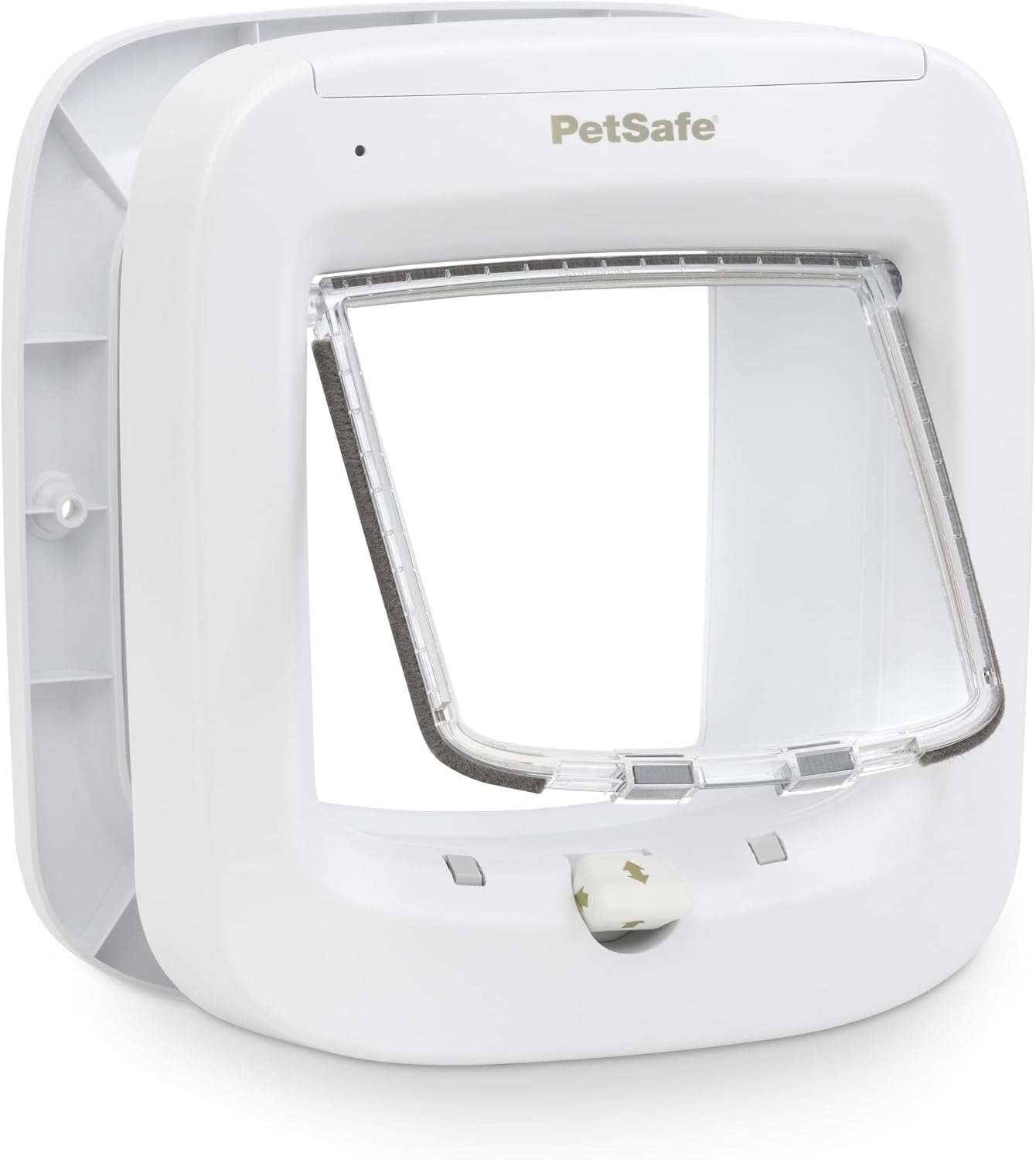
Modern microchip flaps (SureFlap, PetSafe) unlock with a small motor that makes a distinct 'clunk' or 'buzz' 1–2 seconds after chip detection. For sound-sensitive cats this is worse than the flap clatter.
Fixes:
• Move the flap 2 seconds ahead — walk your cat towards the flap; the motor unlocks *before* they arrive, no association with pushing through.
• Switch to always-unlocked mode for 2 weeks (they get used to pushing without the motor sound), then re-enable microchip locking.
• Try a different brand — Pet-Tek and Cat Mate manual flaps have no motor at all. Full details on the SureFlap vs PetSafe comparison.
Fix 7 — Height & Approach Angle
If the flap is more than 12 cm from the floor (measured on the cat's side, including any step or lip), small or elderly cats physically struggle. They lift a paw, misjudge, and get spooked.
Options:
• Add a ramp on the outside — a piece of decking board at 20 degrees works well
• Add a stool or box on the inside if the floor level is lower
• Refit the flap at the correct height — we do this as a callback for around £60 if the door type allows it. Contact us via the quote form.
Fix 8 — Rebuild After a Bad Experience
If your cat has already had a scare — flap slammed on their tail, another cat ambushed them at the flap, they got trapped between two flaps — normal training won't work. You need to reset the association.
• Cover the flap completely for 7–10 days with a piece of cardboard (both sides)
• Feed and play near the covered flap so it becomes a neutral object again
• Restart from Fix 1 (fully taped open)
• Consider relocating the flap to a different door if the specific location has the bad association — sometimes the only real fix
Callback re-installs into a different door are around £180–£380 depending on door type.
Fix 9 — Give It Time
Confident cats learn in 2–3 days. Nervous cats (rescue cats, seniors, single-cat households) sometimes take 4–6 weeks. That's normal.
Signs you're winning:
• Cat sniffs the flap unprompted
• Cat sits near it grooming
• Cat watches other cats or you push through
• Cat pushes the flap with a paw without going through
All of these are pre-use behaviours. Keep positive reinforcement going and don't force. Every forced-through experience sets you back 3–5 days.
When to Give Up and Change Approach
If after 8 weeks of proper training your cat still won't use it, consider:
• Different flap model — smaller, quieter, or manual. Take the cat flap quiz with your cat's traits in mind.
• Different location — some cats will use a window flap but not a door flap, or vice versa. See our window fitting page.
• Timed feeding indoors — accept the cat won't use it and keep them indoor-only. Not ideal but better than months of stress.
We've never had a physically-healthy adult cat that couldn't be trained to use a flap given enough time and the right setup.
Need Help?
If the flap is at the wrong height, faulty, or your cat needs a quieter model, we can help. We fit flaps across the North West, Cheshire, Staffordshire, North Wales and Yorkshire — all backed by our 3-year workmanship guarantee.
Request a callback or ask a fitter for advice on your specific situation.
Shop Microchip Cat Flaps on Amazon:
Manual Cat Flaps: