Which Direction Should a Cat Flap Face? UK Orientation Guide
Why Orientation Matters
Cats are creatures of routine and comfort. A flap on a wind-blasted, rain-driven elevation will be used less, leak more, and wear seals faster than one on a sheltered side of the house. In the UK, prevailing weather comes from the south-west — so south
• and west-facing flaps take the brunt of wind-driven rain, while north- and east-facing flaps stay drier but colder.
There's no single 'correct' direction, but there is a best choice for *your* layout.
South-Facing Flaps (Sun + Driving Rain)
Pros: Warm in winter sun, the flap and frame dry quickly after rain, cats love sunbathing on the patio just outside.
Cons: Takes the worst of UK south-westerly storms. UV degrades plastic flap doors faster (5–7 years vs 8–10 on a north elevation). Expect to replace perimeter seals more often.
Best for: Conservatories, kitchen patio doors with overhang, sheltered gardens.
North-Facing Flaps (Cold but Sheltered)
Pros: No UV degradation, sheltered from prevailing weather, very long seal life.
Cons: Coldest elevation — condensation is more common. The patio outside stays frosty in winter and cats may be reluctant to use it on icy mornings.
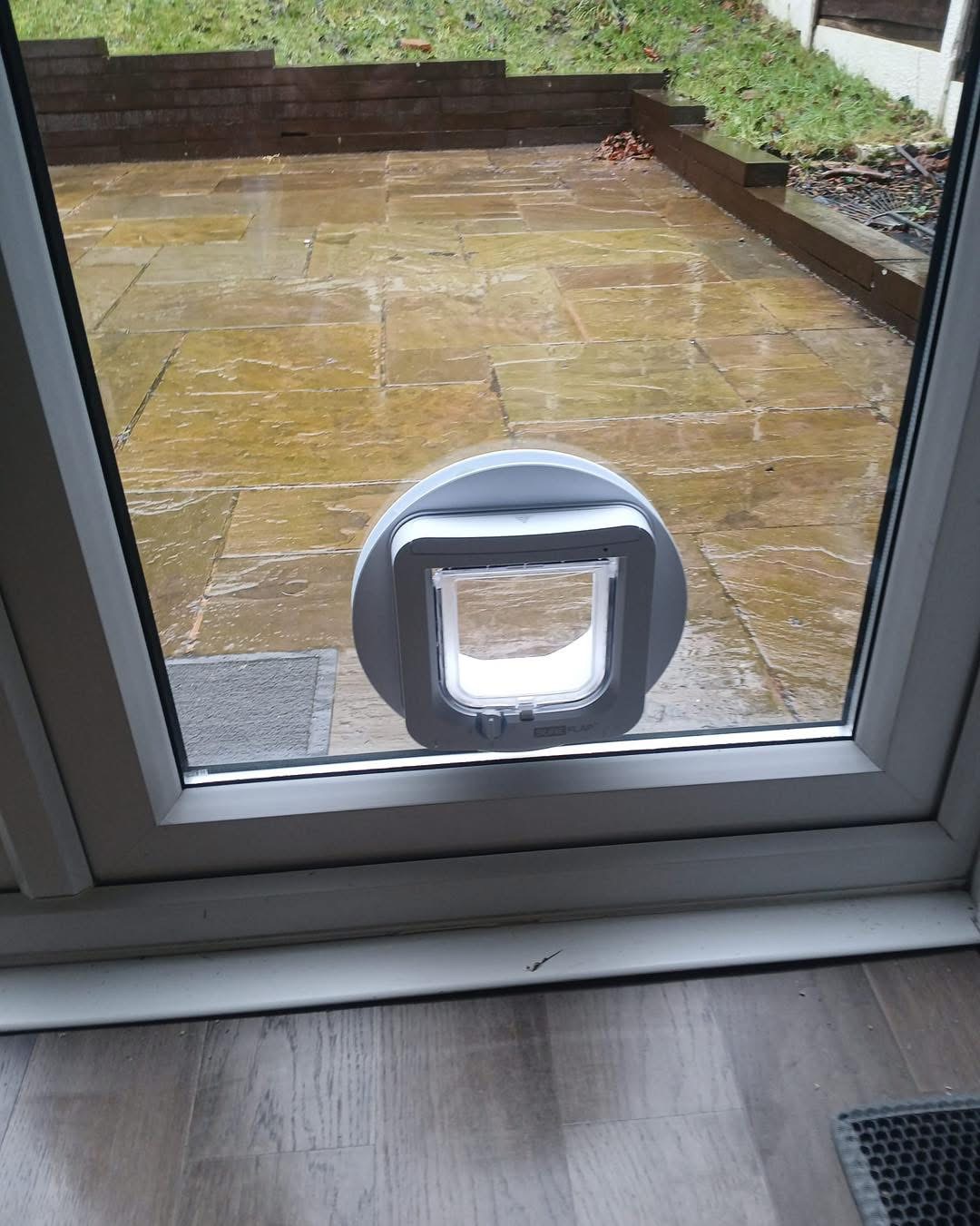
Best for: Utility room or boot room exits where a brief outdoor visit is fine. Pair with a well-insulated flap like the SureFlap DualScan or Pet-Tek glass-fit.
East-Facing Flaps (Morning Sun)
Pros: Sheltered from prevailing wind, gets warming morning sun, dries quickly. Generally the most balanced choice in the UK.
Cons: Can get cold afternoon shade. Limited if your back garden is on the west side.
Best for: Most UK homes if the layout permits.
West-Facing Flaps (Storm Side)
Pros: Warm evening sun, often opens onto the main garden in UK semi-detached layouts.
Cons: Direct hit from south-westerly storms — water ingress is the #1 reason west-facing flaps need re-sealing. A storm porch, awning or recessed doorway transforms this elevation.
Best for: Sheltered or recessed west-facing doors only. Otherwise pick a different exit.
Other Factors That Beat Compass Direction
Compass direction is a starting point. These usually matter more:
• Cat's preferred route. Watch where your cat already exits when you open a door. Fitting the flap on their existing route doubles uptake.
• Visibility of predators. Cats prefer an exit where they can see the garden before committing. A solid door with a clear glass panel + flap is ideal.
• Distance from food and litter. Don't fit the flap right next to either — cats avoid eating near a busy entry point.
• Noise. Don't fit beside a bedroom wall if you have a midnight rambler.
• Quiet exit for shy cats. Side return or utility door beats a busy front-of-house entrance.
If you're unsure, our glass door fitting service covers any elevation, and our Will It Fit checker confirms door compatibility before you book.
Special Cases
Bungalows: flap height matters more than direction — keep the bottom of the flap 100–150 mm above the floor for adult cats, lower for kittens/seniors.
Flats and ground-floor apartments: orientation onto a communal area may need landlord consent. See our rented property guide.
Coastal homes: salt air degrades all flap plastics regardless of direction — choose a stainless-fixings option and replace seals annually.
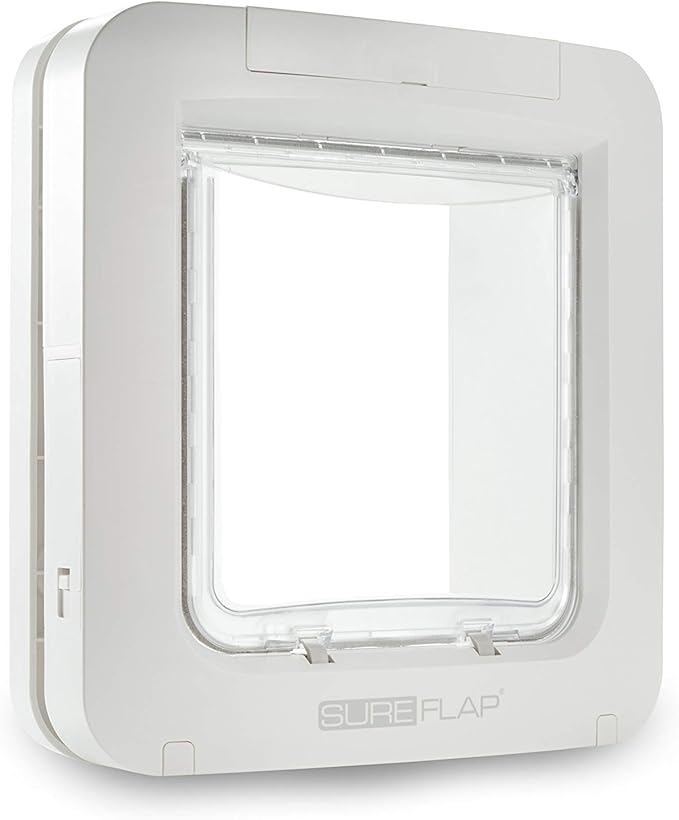
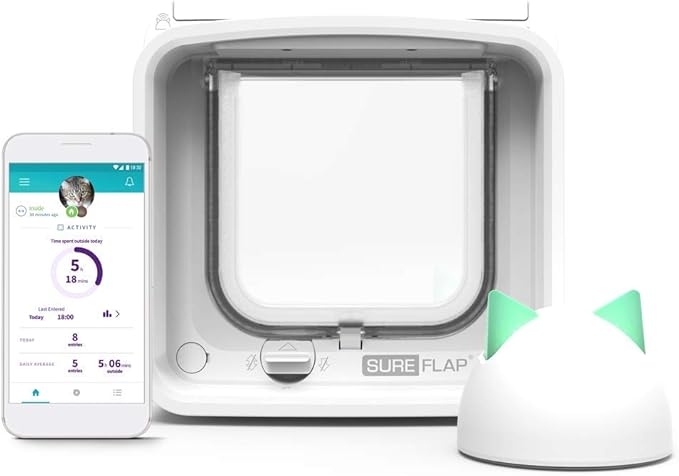
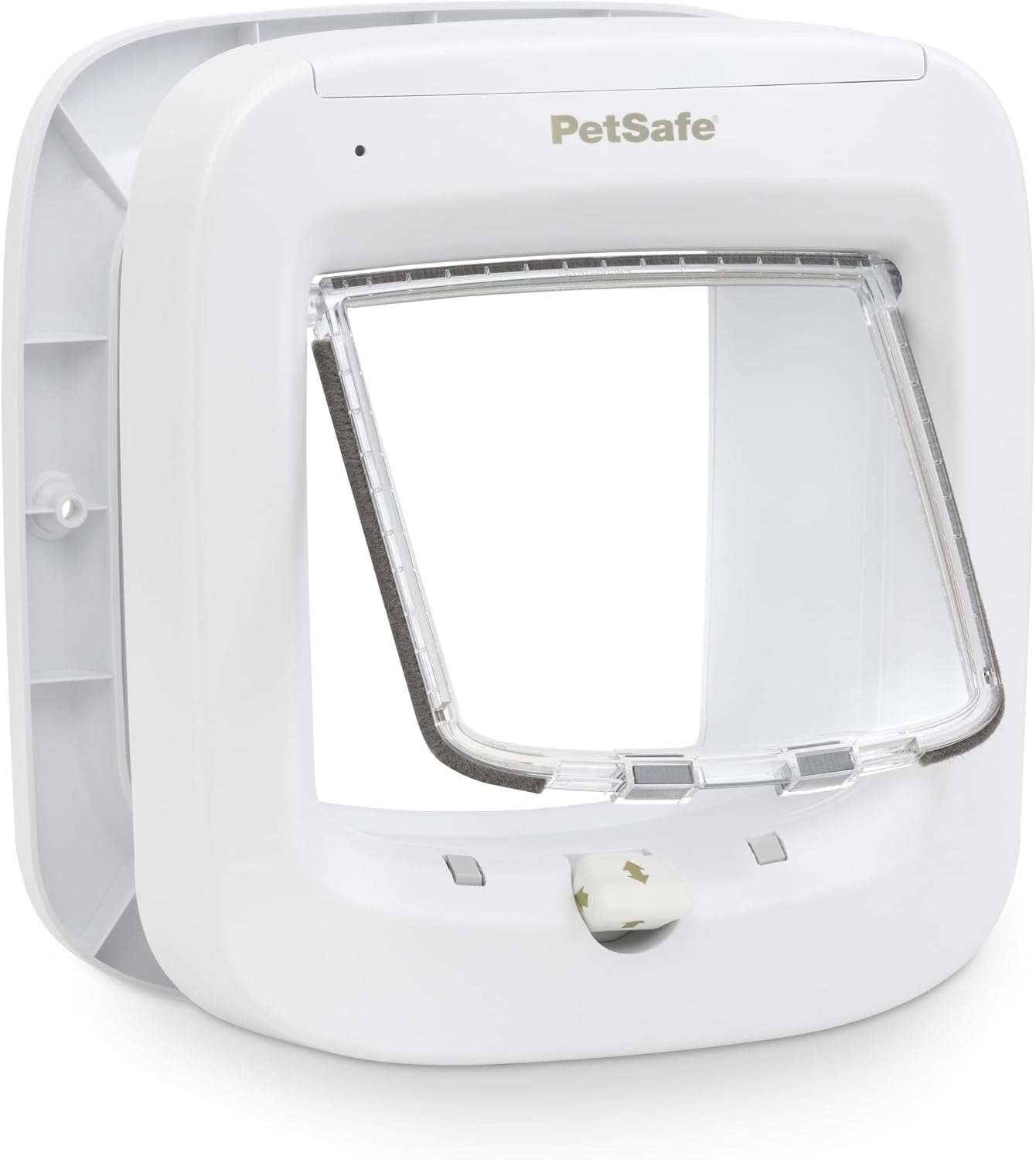
Shop Microchip Cat Flaps on Amazon:
Manual Cat Flaps: