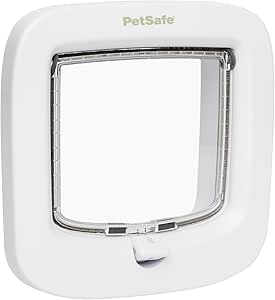
Cat Flaps for Garages, Sheds and Outbuildings: What Actually Works
Quick Answer
• Timber shed or stable door → easiest job on the list. Standard flap, from around £60 fitted, an hour or less.
• Garage personnel side door (uPVC, composite or timber) → straightforward, same as a house door.
• Up-and-over or roller garage door → don't fit into the moving panel. The flap fouls the mechanism, the panel flexes and the seal never holds. Use the side door or a wall panel.
• Sectional garage door → possible in a single flat section on some doors, but check the manufacturer's guidance and the panel's insulation core first.
• Metal shed → possible with the right cutting technique and edge protection, but the cut edge must be trimmed or the flap will chew the tunnel.
And whichever route you take: a microchip flap is far more important out here than on the house, because a garage flap otherwise becomes an open invitation to every cat, rat and squirrel in the street.
Why People Fit Them
The usual reasons, in order:
- Litter tray and feeding station kept out of the house.
- Shelter for the cat when the family is out — a warm, dry, safe space that isn't the house.
- Farm, stable and yard cats that live semi-outdoors.
- Access through a garage into the house — a flap in the garage door plus one in the internal door gives a draught-buffered route.
That last one is worth thinking about: two flaps in series is quieter, warmer and more secure than one flap straight into the kitchen.
What Fits What
| Structure | Flap type | Difficulty | Notes |
|---|---|---|---|
| Timber shed door | Any standard flap | Easy | Seal the cut edge with primer/paint |
| Timber stable door | Any standard flap | Easy | Fit in the lower leaf |
| uPVC/composite personnel door | Any standard flap | Easy | Same as a house door |
| Sectional garage door | Standard flap, flat section only | Medium | Check insulation core and warranty |
| Up-and-over garage door | Not recommended | — | Panel flexes, mechanism fouls |
| Roller garage door | Not possible | — | The curtain rolls up |
| Metal shed | Standard flap + edge trim | Medium | Deburr and trim the cut edge |
| Brick/block wall | Wall tunnel kit | Hard | Long-tunnel kit and a core drill |
| Glazed outbuilding panel | New pre-cut toughened panel | Medium | Existing toughened glass can't be cut |
We don't do wall or masonry installations — for those you need a builder with a core drill. Everything above the wall line, we fit.
Up-and-Over Garage Doors: Why Not
This gets asked constantly, so here's the honest answer. On a canopy or retractable up-and-over door:
• The panel is thin steel or GRP that flexes as the door travels. A rigid flap fixed through it works the fixings loose and cracks the panel around the aperture.
• The door's balance is spring-set. Cutting a hole changes the weight slightly and the flap's mass sits off-centre.
• The flap ends up at whatever height the door happens to be — including several feet up when the door is open.
• Cutting the panel usually voids the door manufacturer's guarantee.
The right answer is the side personnel door if you have one, or a flap in a timber infill panel beside the garage. If neither exists, a small timber personnel door can be added to the garage side wall by a joiner and we'll fit the flap into it.
Cold, Damp and Insulation
A garage or shed is unheated, so the flap is the least of the heat loss — but the space still needs to be usable for the cat:
• Bed off the floor. Concrete floors pull heat out of a cat fast. A raised, hooded bed on a shelf or pallet is the minimum.
• A dual-flap model stops wind driving through a shed and is worth the extra £20–£40.
• Watch for damp. Seal the cut edge on timber with primer and paint; a bare cut edge in a shed will rot in a couple of wet winters.
• Ventilation matters more than you'd think — a sealed garage with a litter tray gets unpleasant quickly.
• Never use a paraffin or gas heater in a space a cat is shut in. A microwaveable heat pad or a low-wattage pet-safe heated bed is the safe option.
See our winter cat care guide for the wider picture.
Keeping the Wrong Animals Out
A plain manual flap on an outbuilding gets used by everything. In practice we see other cats, rats, squirrels and occasionally a hedgehog.
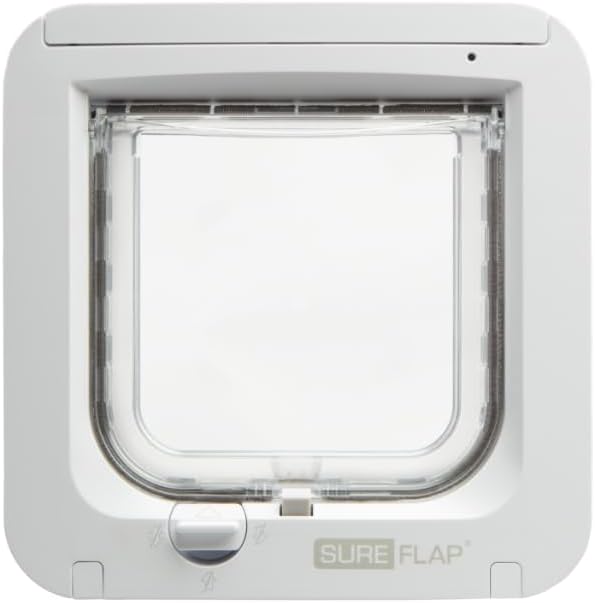
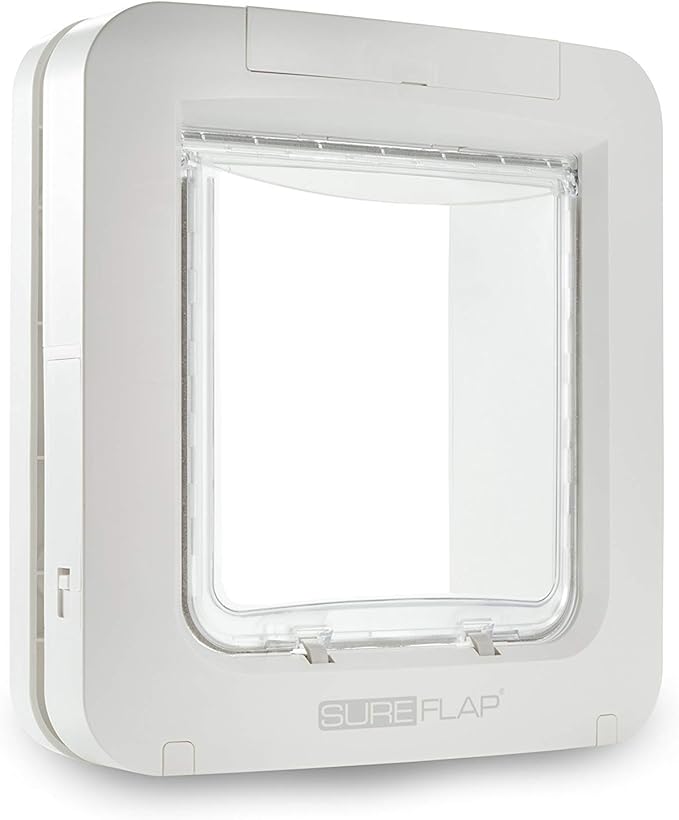
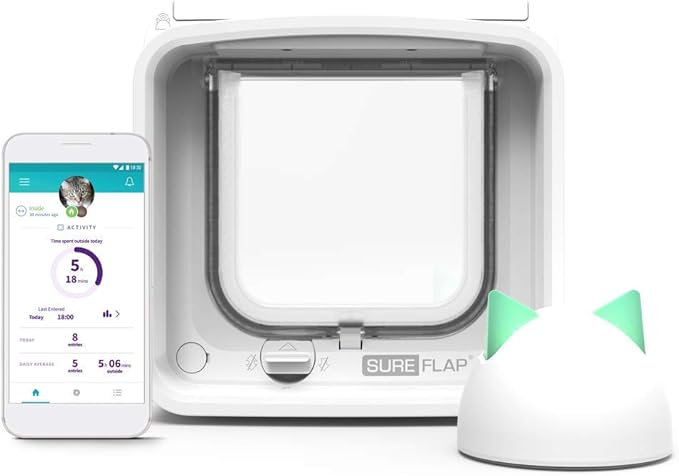
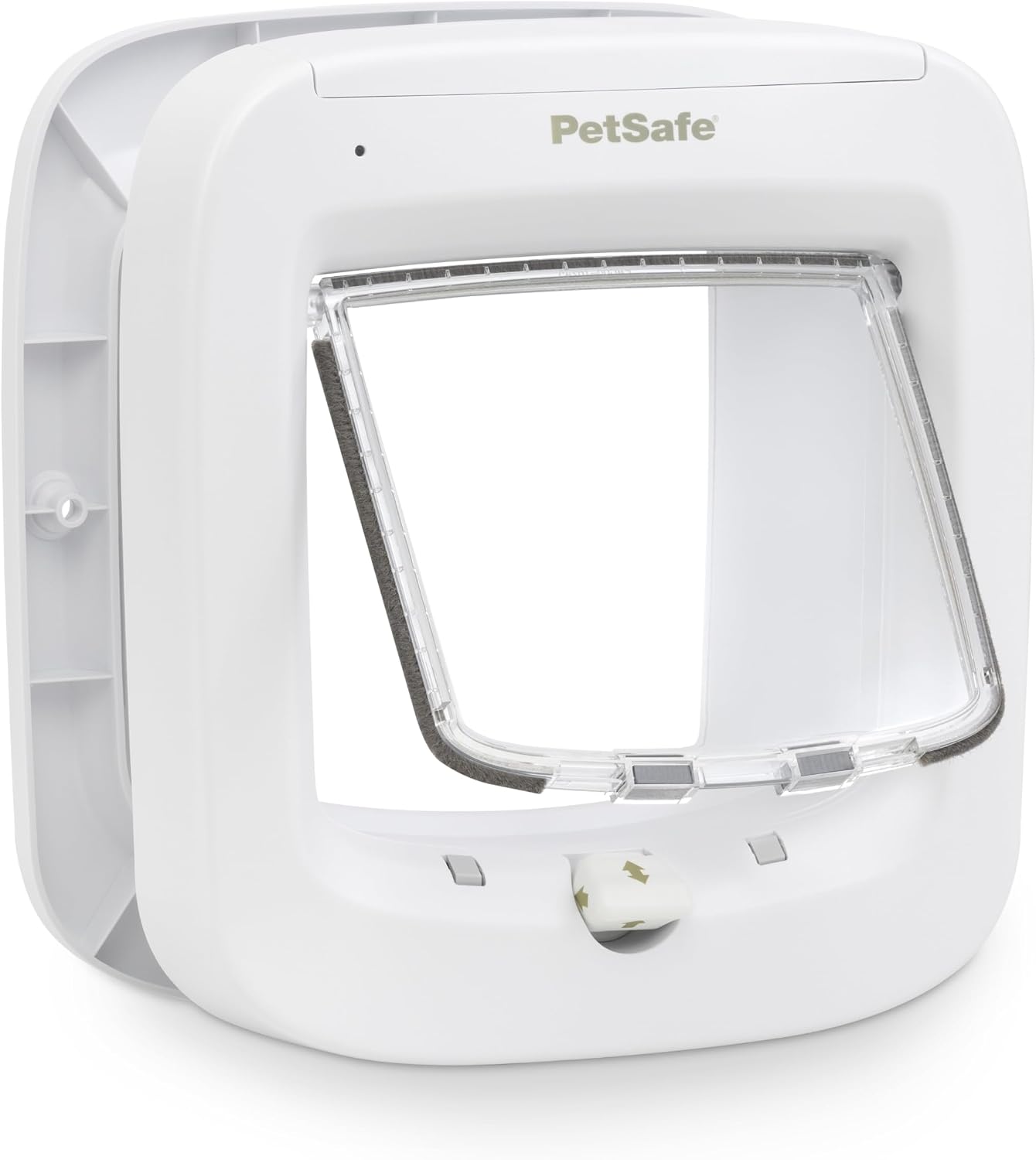
• Fit a microchip flap — it reads your cat's existing chip and stays locked for everything else. Confirm your cat's chip type first with the microchip compatibility checker.
• If the chip can't be read, every manufacturer supplies an RFID collar tag that works with their flap.
• Store feed in sealed bins, not open bags — the flap isn't the reason rats come, the food is.
• For multiple cats with different rules, a DualScan-type flap can allow one out and keep another in.
The Safety Rule Nobody Mentions
The most common winter cat emergency in the North West isn't the road — it's cats shut in garages, sheds and greenhouses. A flap fixes it permanently, provided it stays unlocked and the cat can operate it from both sides.
• Check the flap opens outward and inward freely after fitting.
• Don't set a curfew lock on an outbuilding flap unless the cat is definitely inside the house.
• Train the cat through it the same way you would a house flap — see how to train a cat to use a cat flap.
• Walk the shed before locking up for a weekend regardless.
Costs and Booking
| Job | From |
|---|---|
| Flap in a timber shed or stable door | £60 |
| Flap in a uPVC/composite personnel door | £60 |
| Flap in a sectional garage panel | Quoted on inspection |
| Flap in a glazed outbuilding panel (new toughened unit) | £280 |
We cover Cheshire, Greater Manchester, Merseyside, Lancashire, Staffordshire, Yorkshire and North Wales, and outbuildings are usually a quicker visit than house doors. Check yours with Will It Fit, see areas we cover or request a free quote with a photo of the door.
Shop Microchip Cat Flaps on Amazon:
Manual Cat Flaps: